A traveler opens Google, types “RV park near Asheville,” and books the first result they see. It’s not the biggest park in the area. It doesn’t have the fanciest pool or the most sites. It just showed up first. That’s not luck, and it’s not magic. That’s local SEO doing exactly what it’s supposed to do.
If you’ve ever wondered what is the best local SEO strategy for a small RV park or campground, you’re not alone, and the answer might surprise you. Most campground owners assume they’re invisible online because they’re small. The truth is, size has almost nothing to do with it. The parks consistently landing at the top of Google’s local results are the ones that have put in the right signals, in the right places, consistently. The team at CampgroundWebsites.com has spent years building and managing well-ranked campground sites, and the formula isn’t complicated. It’s just specific.
This guide breaks down the full local SEO playbook in plain English: what to do, why it works, and what order to tackle it in. By the time you finish reading, you’ll have a clear, prioritized action plan you can start on this week.
Why Small Campgrounds Keep Getting Buried in Local Search Results
Before fixing anything, it helps to understand what you’re actually competing for. When someone searches “campgrounds near me” or “RV parks in Gatlinburg,” Google often shows a block of three business listings at the top of the page, each with a map pin, photos, and a star rating. This is the local 3-pack, and it captures the majority of clicks before a single organic result appears below it. Most small park owners don’t even know it exists, let alone how to get into it.
Ranking locally is a completely different game from competing nationally. You don’t need to outrank Travel + Leisure or Campendium for generic camping content. You just need to be the most relevant, trustworthy result for searches happening within your geographic area. That’s a much more winnable fight, and it’s one where a well-optimized small park can beat a larger competitor that hasn’t paid attention to the details.
The piece most owners miss: a website alone won’t move the needle. Google evaluates local relevance using dozens of signals, and your website is just one of them. Reviews, directory listings, your Google Business Profile, and structured data all feed into that score. Launching a site and calling it done is like building a great campground and never putting up a sign on the highway.
What Is the Best Local SEO Strategy for a Small RV Park or Campground?
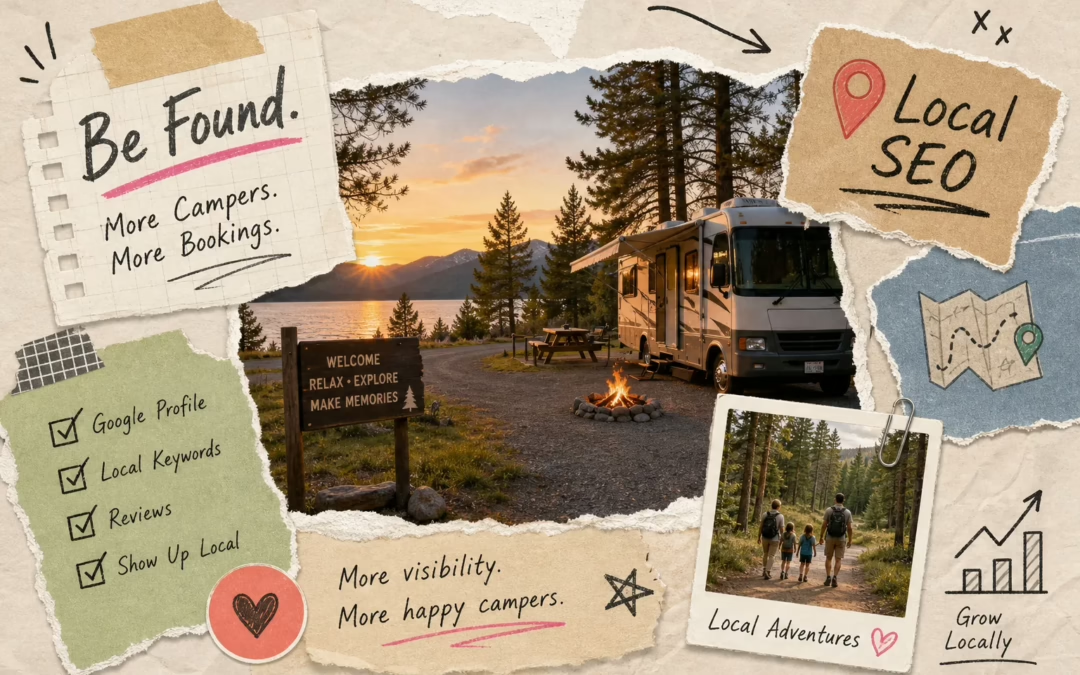
The short answer: five pillars, applied consistently. Google Business Profile optimization, citation building, local keyword targeting, campground schema markup, and review generation. Each one reinforces the others. Skip one and you leave ranking signals on the table. The sections below walk through each pillar in the order that makes the most practical sense to tackle them.
Google Business Profile Optimization: Your Most Powerful Free Tool
If you only do one thing after reading this article, make it this: claim and fully optimize your Google Business Profile (GBP). This is the single biggest lever for local campground SEO visibility, and it costs nothing but time.
Start with the fields that carry the most ranking weight. Set your primary category to “Campground,” then add secondary categories like “RV park” or “Cabin rental” if they genuinely apply. Enter your exact physical address and confirm the map pin lands where guests actually arrive, not out on the highway. Add your real hours, including seasonal updates for when the office is closed in winter.
List every relevant service: full hookups, pull-through sites, tent sites, dump station, Wi-Fi, firewood. Completeness is the goal. Google rewards profiles that look authoritative and finished. Then fill out every applicable attribute, pet-friendly, showers, family-friendly, accessibility features, Wi-Fi, because these help Google match your profile to specific queries like “pet-friendly campground near Flagstaff.”
Photos aren’t just decorative. They’re a ranking and conversion signal. According to Google’s own documentation, profiles with more high-quality images tend to get more clicks, and more clicks reinforce your local ranking. Aim for at least 20 photos covering your sites, bathhouses, entrance signage, hookup stations, and seasonal scenes that show off your park at its best.
Finally, keep the profile active. Post seasonal promotions, event announcements, or a quick update about holiday hours. Respond to questions in the Q&A section. Most campground owners skip this entirely, which means the ones who do it stand out immediately. Fifteen minutes a month signals to Google that your business is alive and engaged.
Local Citations for Campgrounds: Building the Trust Footprint
A local citation is any mention of your campground’s name, address, and phone number (NAP) on an external website. When these three pieces of information match exactly across dozens of directories and listing sites, Google gains confidence that your business is real, established, and trustworthy. One inconsistency, like “County Road” on your website but “County Rd.” in a directory listing, can quietly dilute that trust signal.
Which Directories Matter Most for RV Parks
For campgrounds specifically, start with the directories that carry the most relevance to your niche. Submit your listing to Google Business Profile, Bing Places, Apple Maps, and Yelp first. Then move into campground-specific directories: Campendium, Good Sam, RV Life Campgrounds, AllStays, Pitchup, and your state’s tourism association directory. These carry stronger contextual relevance for campground searches than generic business directories, and they’re often where travelers browse before they type a single query into Google. A helpful resource on the best directories to list your RV park can speed up this process.
Cleaning Up Outdated Listing Data
Many campgrounds already have listings out there with incorrect information, submitted by users or data aggregators years ago. If your park changed phone numbers, moved locations, or rebranded at any point, outdated info is almost certainly floating around online. Search for your campground’s name on each major platform, claim every listing you find, and correct any errors. It’s time-consuming work for older parks, but it’s critical for building the consistent NAP footprint that local SEO for RV parks depends on.
Using City and State Keywords to Attract the Right Travelers
Travelers searching for a place to stay aren’t typing generic phrases. They’re searching “RV park near Gatlinburg,” “full hookup campground near the Smoky Mountains,” or “pet-friendly campground in the Texas Hill Country.” These are high-intent searches: the person has a destination in mind and is ready to book. Your website needs to speak their language to show up for those queries.
The most effective approach is to create targeted pages for specific local searches rather than relying on a generic homepage alone. A page optimized for “[City] RV park” or “[State] campground near [attraction]” gives Google a clear signal about what geographic area you serve and what type of traveler you’re trying to reach. Work your location-based keywords into page titles, headers, image alt text, and body copy. Natural, helpful usage wins over forced repetition every time. If you need inspiration for which pages to add, our guide on campground website pages that turn browsers into guests lists the highest-impact pages to create first.
Campground Schema Markup: A Small Investment That Pays Off
One addition worth the time: campground schema markup. This is structured code added to your website that tells Google exactly what your site is about, your geo-coordinates, amenities, pricing range, and whether pets are allowed. It doesn’t require coding skills if your web platform supports it. A properly implemented schema helps Google understand your property faster and can surface richer details in search results before a guest ever clicks through.
At minimum, a campground schema implementation should include: business name, address, telephone, URL, geo-coordinates (latitude/longitude), price range, amenities offered, and whether pets are permitted. Many website platforms let you add this through a plugin or settings panel, no developer required.
Review Management for RV Parks: Earning Trust at Scale
Reviews do two things for your campground. They build trust with potential guests who read them, and they influence your visibility in the local 3-pack. Parks ranking at the top of Google in competitive tourist areas typically have 100 or more reviews. In smaller markets, 25 to 50 solid reviews can be enough to stay competitive. The key is building that number consistently over time.
Timing matters more than most owners realize. The best window to ask for a review is within 24 to 48 hours after checkout, while the stay is still fresh. A short, personalized email or text works better than any automated broadcast. Use the guest’s name, reference something specific about their stay, and keep the message brief. Include a direct link to your Google review page to remove any friction. Something as simple as: “Thanks for staying with us, [Name]. If you have a moment, we’d really appreciate your honest feedback here: [link].”
One rule to live by: never ask for a five-star review. Google’s policies prohibit soliciting a specific rating, and reviews that appear manipulated can be removed or flagged. Ask for honest feedback and let the experience speak for itself. Once reviews start coming in, respond to every single one, positive and negative alike. Responding to a negative review professionally can actually increase bookings by showing how your team handles problems. It’s one of the most underused conversion tools in the campground business.
DIY vs. Done-for-You: What Managing All of This Really Takes
Consistent local SEO for a small RV park or campground isn’t a one-time setup. Each month it involves updating your Google Business Profile, monitoring citations for errors, posting fresh content, requesting and responding to reviews, tracking performance metrics, and making website content updates. For a campground owner running the day-to-day operation, that’s a real time commitment stacked on top of everything else.
Some of it is DIY-friendly, especially once the foundation is built. Responding to reviews, posting seasonal updates on your GBP, and asking guests for feedback are all tasks you can handle without outside help. The more technical work, building out location-specific web pages, implementing schema markup, managing citations across 20-plus directories, and interpreting monthly traffic data, is where most owners hit a wall.
Full disclosure: CampgroundWebsites.com is who we are, and this is what we built for parks like yours. The fully managed monthly service covers professional website design built specifically for campgrounds, built-in local SEO, directory submissions, monthly traffic and performance reports, ongoing content updates, and all the behind-the-scenes technical maintenance. The local SEO groundwork is baked into every website from day one. You focus on your guests; we handle the rest.
Start Now, Stay Consistent, and the Results Compound
The best local SEO strategy for a small RV park or campground comes down to five pillars applied over time. Google Business Profile optimization, NAP-consistent citation building, local keyword targeting, schema markup, and review generation aren’t a one-and-done checklist. They’re ongoing signals you build and maintain. The parks dominating local search results next season are the ones taking action on these today.
Start with your Google Business Profile since it’s free, impactful, and completely within your control. Then build out your citation footprint, clean up any outdated listings, and make sure your website has targeted local content that matches how your guests actually search. Layer in a consistent review-request process, and you’ll start to see your ranking improve within a few months.
If you’d rather have the whole thing handled by a team that has been doing this exclusively for campgrounds and RV parks since 2011, head over to CampgroundWebsites.com. The local SEO strategy isn’t an add-on. It’s built into every site we design and manage, so you’re set up to rank from day one.