If you’re wondering how to promote an RV park effectively, the answer usually isn’t a better location or lower prices. It’s visibility. A full park in peak season is easy to love. An empty park in September is a different feeling entirely. Most RV park owners are either invisible online, spending money on the wrong channels, or running a website that sends potential guests straight to the competition.
This article covers 15 specific tactics for promoting your RV park, organized from foundation to amplification. Some cost nothing but time. Others require a modest budget. All of them work better when applied in order rather than jumping straight to paid ads with no digital home base behind them.
That home base is the first thing to fix. The most successful campground operators treat their website like a retail storefront: it either pulls people in or pushes them elsewhere. If yours isn’t doing the job, CampgroundWebsites.com is built specifically for RV park owners who want that foundation done right, without touching a line of code.
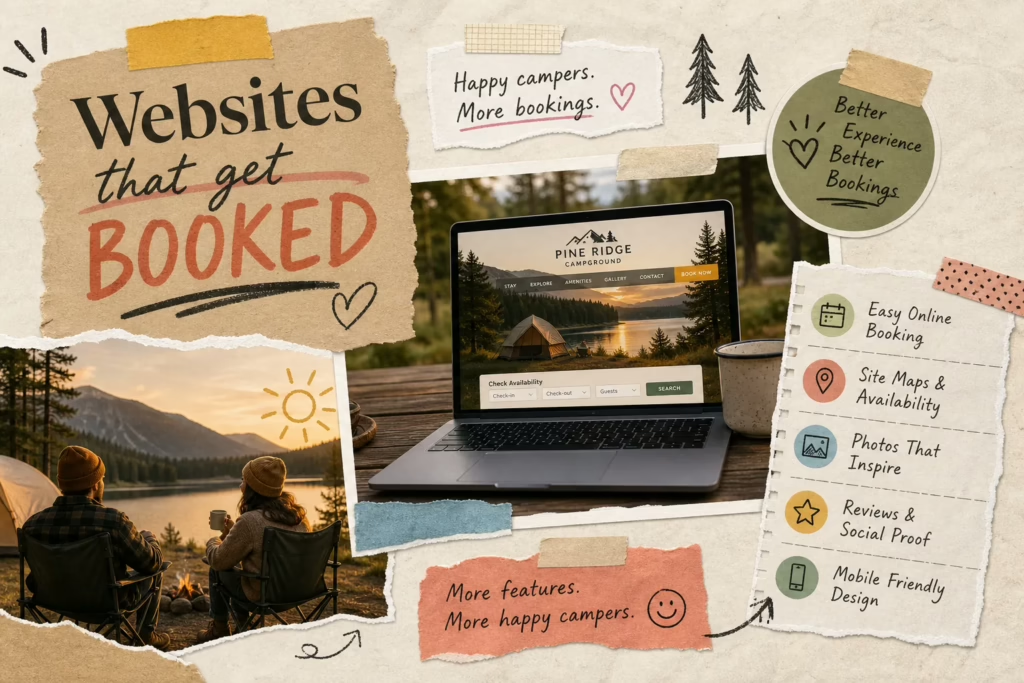
1. Build a direct-booking website that works while you sleep
This is the load-bearing wall of your entire RV park promotion strategy. Every tactic below performs better when it sends traffic to a strong website. Get this one wrong and you’re paying to send people to a dead end.
Why direct bookings beat OTA commissions every time
Listing on third-party platforms isn’t wrong, but relying on them is expensive. Hipcamp charges private landowners 15% per booking and PMS-integrated parks 12.5%. That’s a real slice of revenue on every reservation you didn’t earn directly. Multiply that across a full season and you’re handing over thousands of dollars that a direct-booking website would have kept in your pocket.
A direct-booking site also gives you something OTAs can’t: control. You set the availability, the pricing, the cancellation terms, and the entire first impression. When a guest finds your park through Google and lands on your site, the booking experience is yours to shape from the first click.
What a campground website needs to convert visitors into guests
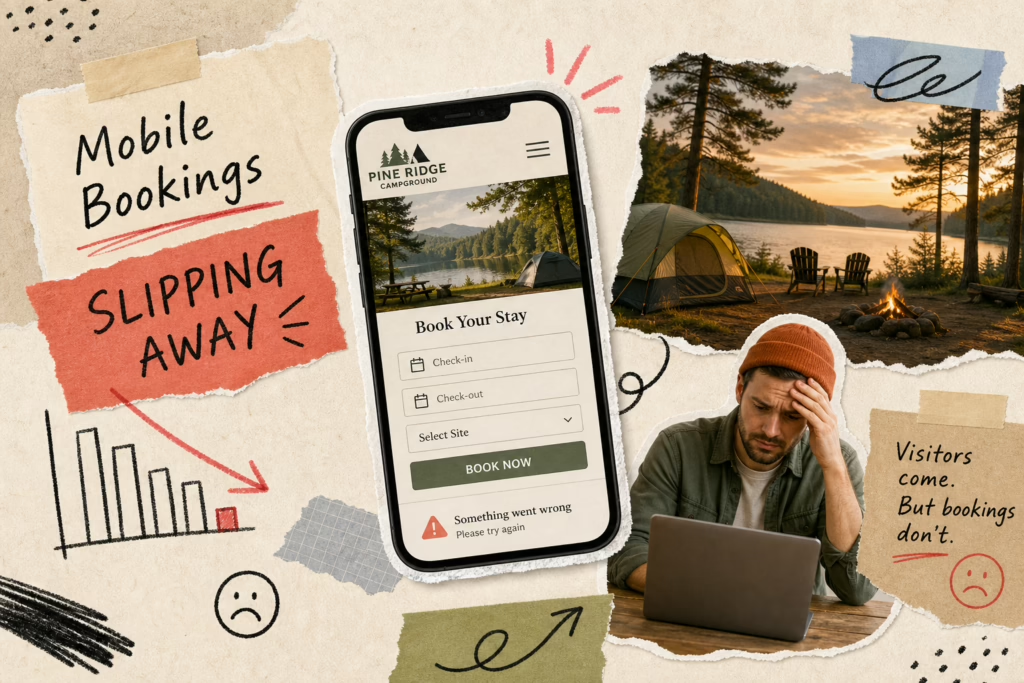
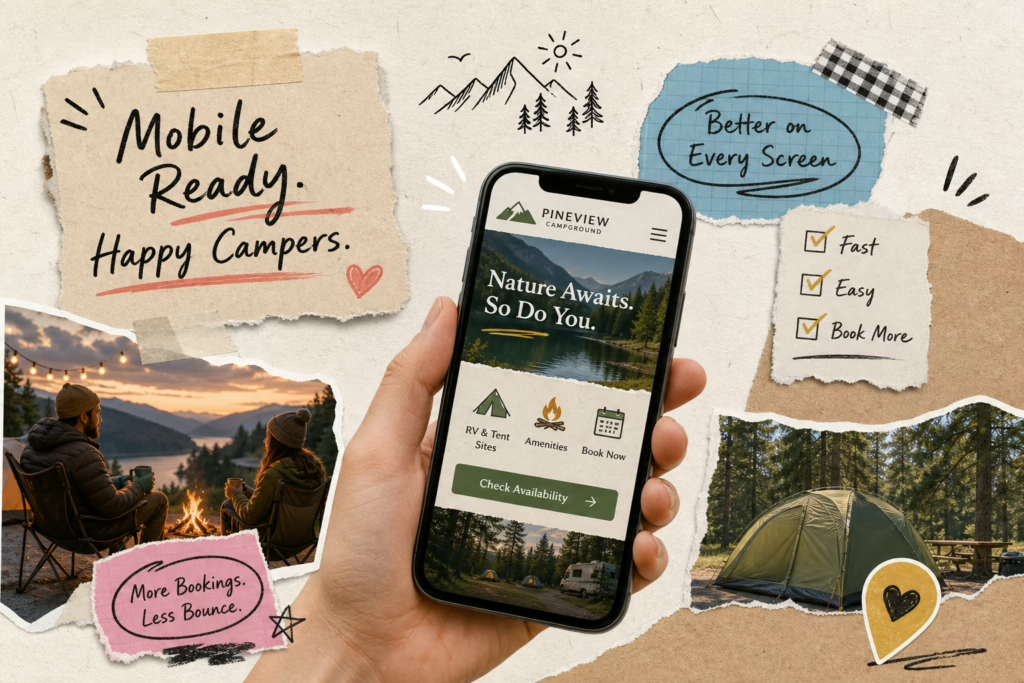
Tactic 1 is having the website at all. Tactic 2 is making sure it actually converts. The non-negotiables: mobile responsiveness, fast load times, real photos of actual sites, clear amenity descriptions, and an easy path to a reservation. If any of those are missing, visitors leave and most don’t come back.
CampgroundWebsites.com builds websites specifically for RV parks and campgrounds. The service includes $0 upfront, full customization, built-in SEO, and booking-platform flexibility so you’re never locked into a specific reservation system. It’s fully managed, so you never touch the backend. A professionally built site is the difference between a visitor who reserves a site and one who books at a competitor down the road. For practical steps to increase bookings after your site is live, see our guide How to Get More Campers to Your Campground This Year.
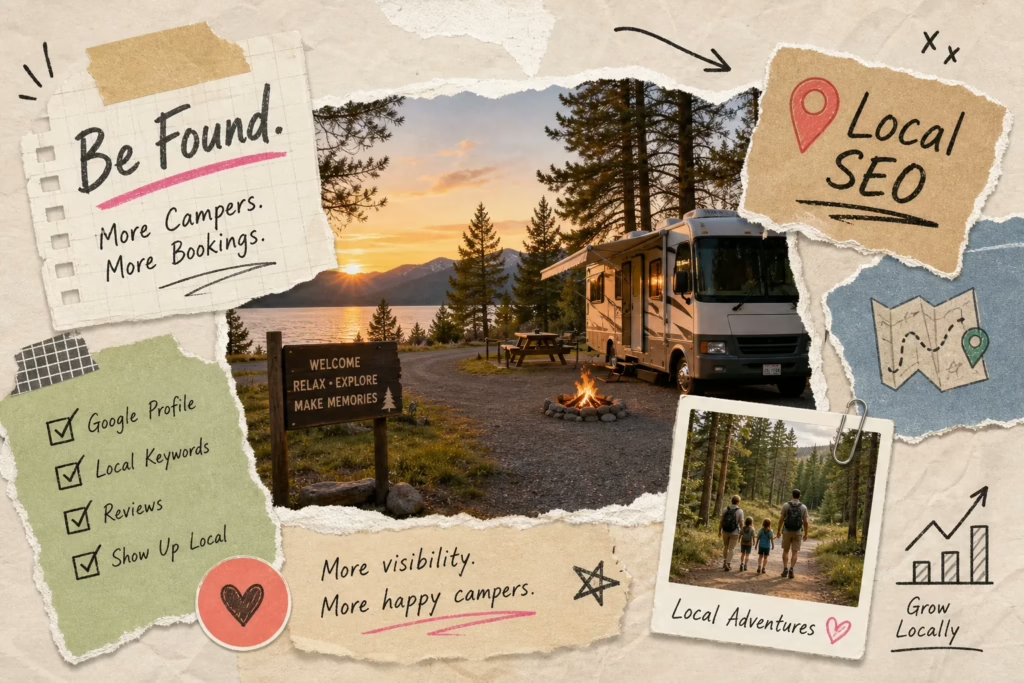
2. How to promote an RV park for free: local SEO and directory listings
Before spending a dollar on advertising, there are several high-visibility channels that cost nothing but time. Campground SEO and directory listings are the lowest-hanging fruit in RV park marketing, and they compound over time.
Claiming and optimizing your Google Business Profile
Tactic 3 is your Google Business Profile, and it’s not optional. This is what determines whether your park appears in Google Maps when someone nearby searches for a campground. A complete, accurate, photo-rich profile with fresh reviews consistently outperforms a bare-bones listing.
Fill in every field: business name, primary category (RV Park or Campground), exact address with a correctly placed map pin, hours, phone number, website, and amenity attributes like Wi-Fi, hookups, and pet-friendly access. Upload real site photos. Respond to every review. Post updates during peak booking windows. CampgroundWebsites.com clients have Google and Bing submission handled automatically as part of the service. If you want a short checklist to follow, this guide on optimizing your campground’s Google Business listing lays out five essential actions that make a measurable difference.
Niche directories that put you in front of active campers
Once your Google profile is solid, get listed on the campground-specific platforms where your future guests are already searching. These are Tactics 4 through 7:
- Campendium: A trip-planning map used by RVers for discovery and reviews. Free to list and effective for organic visibility with a camping-focused audience.
- RV Parky: A directory of RV parks, rest areas, and RV-friendly stops. Straightforward listing with user reviews and strong niche relevance.
- Spot2Nite: A marketplace reaching high-intent campers with real-time availability. Their Featured Listing option claims 2.51x exposure, but it requires a 12.5% rate discount plus fees. Start with the free listing and evaluate the upgrade based on your actual shoulder-season fill rate.
- Recreation.gov: If your park is adjacent to public land or federal recreation areas, this platform can drive significant discovery traffic from campers already planning trips to the area.
Start with the free listings on all four before evaluating paid placements. The goal at this stage is coverage, not spend. For a deeper look at the power of local SEO and how to get found when campers search for RV parks, that resource offers practical tactics you can implement quickly.
3. Social media content that actually drives reservations
Most campgrounds post pretty sunset photos and wonder why their sites aren’t filling. The content types that drive real bookings are more specific than that, and they’re not complicated once you know what works.
How to promote an RV park using social media: post formats that move people from scrolling to booking
Tactic 8 is producing content that removes uncertainty. The posts and Reels that generate actual booking inquiries show exactly what guests are purchasing: a site walkthrough showing hookups and views, an availability post (“3 pull-throughs open this weekend, link in bio”), or a short video answering the questions guests always ask before booking. Instagram Reels are worth prioritizing right now because of their organic reach potential with a camping-curious audience.
Specificity is the conversion lever. When a potential guest can see exactly what they’re booking, friction drops. When they see a time-limited opening, urgency takes over. Those two things together outperform polished brand imagery every time. For additional ideas on formats and cadence, check out this piece on how to leverage social media for your campground, which includes post examples you can adapt.
Turning guest experiences into your best marketing asset
Tactic 9 is building a user-generated content engine. Real photos and videos from actual guests function as social proof in a way no branded content can replicate. A candid photo of a family around a fire pit, tagged with your handle, does more for trust than anything you stage yourself.
Use a branded hashtag and display it on-site. Offer a small, experience-based incentive for posting: a future discount, a free amenity pass, or a cup of coffee at check-in. Run a monthly “Photo of the Month” repost so guests know their content will be seen. Make the ask during or right after the stay, when enthusiasm is highest and the experience is still fresh.
Tactic 10 is responding to every review within 24 hours. For positive reviews, a brief, specific thank-you reinforces the relationship. For negative ones, acknowledge the concern, apologize without deflecting, and explain concretely what you’ve addressed. Review responses are visible to every future guest who reads them, and they signal that real people run this place.
4. Partnerships and travel blogger stays that expand your reach
Some of the most cost-effective campground promotion doesn’t involve ad spend at all. It involves the right handshake with the right business, structured with clear terms so both sides actually benefit.
Local cross-promotions that send warm leads your way
Tactics 11 and 12 are built on shared audiences. RV dealers are a natural starting point: offer a camping pass or booking voucher for new RV buyers, and the dealer promotes your park at the point of sale. Programs like Thousand Trails’ dealer network do this at scale. Outfitters and local attractions are equally practical. A “stay 2 nights, get a discounted paddleboard session” bundle appeals to exactly the same guest. A kayak rental shop that hands out your booking card with every rental becomes a referral channel at zero ongoing cost.
Keep the agreement structure simple. A discount swap, a flat $25 referral fee per confirmed booking, or a co-branded seasonal package are all workable frameworks. Pilot one partnership before scaling to three. Start small with partners you trust, coordination matters more than volume early on.
Hosting travel bloggers and influencers the right way
Tactic 13 is influencer stays, and the framing matters: this is a top-of-funnel awareness play, not a direct conversion tool. The value is introducing your park to a new, aligned audience. Family RVers, full-timers, and weekend warriors who follow the right creator and discover your park through their content are warmer leads than anyone you’d reach through a cold ad.
Look for content creators whose audience matches your guest profile, not just their follower count. Offer a complimentary stay in exchange for content rights. Set clear deliverables upfront: number of posts, tagged accounts, and branded hashtag usage. Prioritize creators who produce authentic, repostable content, because the real return comes when you use their footage in your own channels long after their visit ends.
5. Email, paid ads, and dynamic pricing to fill the slow weeks
Once your free and organic channels are running, these tactics amplify results and help fill the gaps that organic reach can’t always cover. This is where you close the gap between a good season and a great one.
Building an email list that earns bookings all year
Tactic 14 is email marketing, and it’s the most underused channel for independent parks looking to boost RV park bookings. It reaches guests who already trust you, costs almost nothing to run, and is especially effective for shoulder-season promotions. A guest who had a great stay is far more likely to book again when you put the right offer in their inbox at the right moment.
Build the list with a signup at checkout, a “return guest discount” opt-in on your website, and automated post-stay follow-up sequences. Send one monthly newsletter with local events, campground updates, and availability highlights. Add a targeted campaign two to four weeks before your historically slow periods. Personalized subject lines using guest names can raise open rates by up to 29%, so use them when you have the data.
Facebook and Instagram ads and smarter site pricing
Tactic 15 covers both paid social and dynamic pricing, because both solve the same problem: filling inventory that organic channels missed. Facebook and Instagram ads let you target campers by interest, geography, and behavior, and retarget visitors who landed on your site but didn’t book. Track booking conversions and direct reservations as your primary KPIs. CTR is useful upstream data, but filled sites is the goal.
For parks currently running static rates, dynamic pricing tools like PriceLabs’ pricing plans are worth evaluating alongside your paid ad spend. The platform runs about $14.49 per listing per month after a 30-day free trial, using demand signals, market data, and competitor rates to adjust your pricing automatically. PriceLabs’ research points to roughly 9 to 11% revenue gains from optimized last-minute and far-out pricing strategies. For a small park, the math is straightforward: if the software pays for itself in one additional booking per month, it’s more than earning its place. For practical ideas on ad creative and channel mix, see our Campground Advertising Ideas That Actually Drive Bookings.
The order matters more than the tactics themselves
The hierarchy is what makes this work: website first, then free visibility through local SEO and directories, then content and community through social media and partnerships, then amplification through email, paid ads, and pricing tools. Every layer builds on the one below it. Scattered effort with no home base produces scattered results.
Knowing how to promote an RV park isn’t about doing all 15 of these at once. It’s about building each layer intentionally, starting with the foundation, and adding channels as the ones below them are working well. Most parks that struggle with bookings aren’t in the wrong location or missing a key amenity. They’re struggling because their digital presence doesn’t match the quality of the experience they actually deliver.
If your website isn’t already pulling its weight, that’s the first fix. It doesn’t have to cost a fortune upfront. CampgroundWebsites.com exists specifically to solve that problem for independent park owners who’d rather spend their energy on their guests than their backend. Get the foundation right, and every one of these RV resort marketing strategies will perform the way it’s supposed to. For ongoing tips and updates, visit our Campground Marketing Ideas: Our Blog.