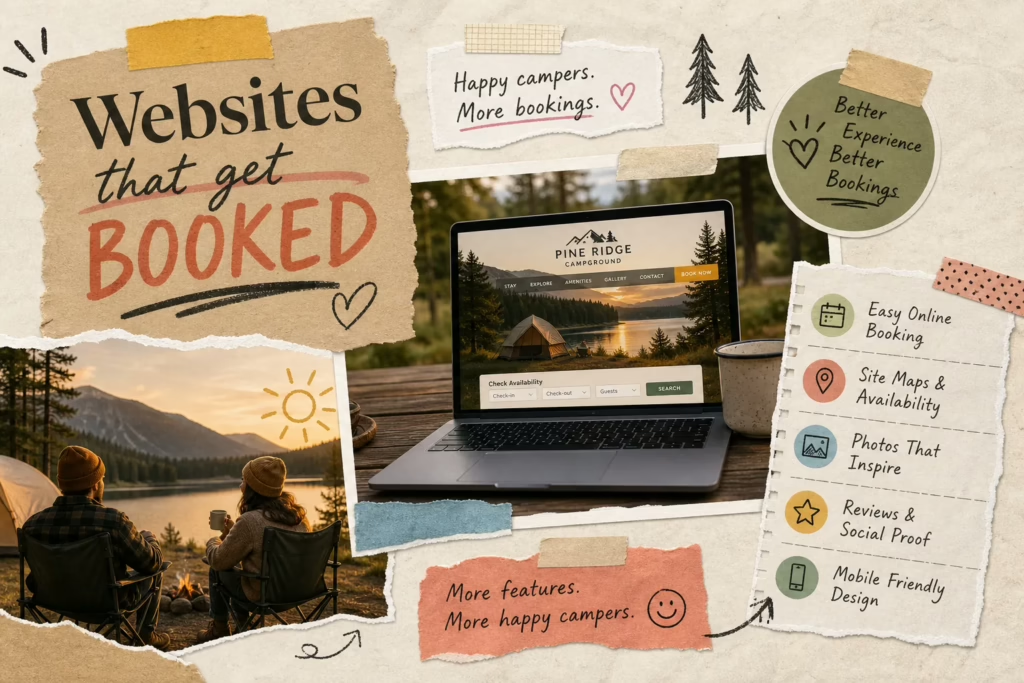
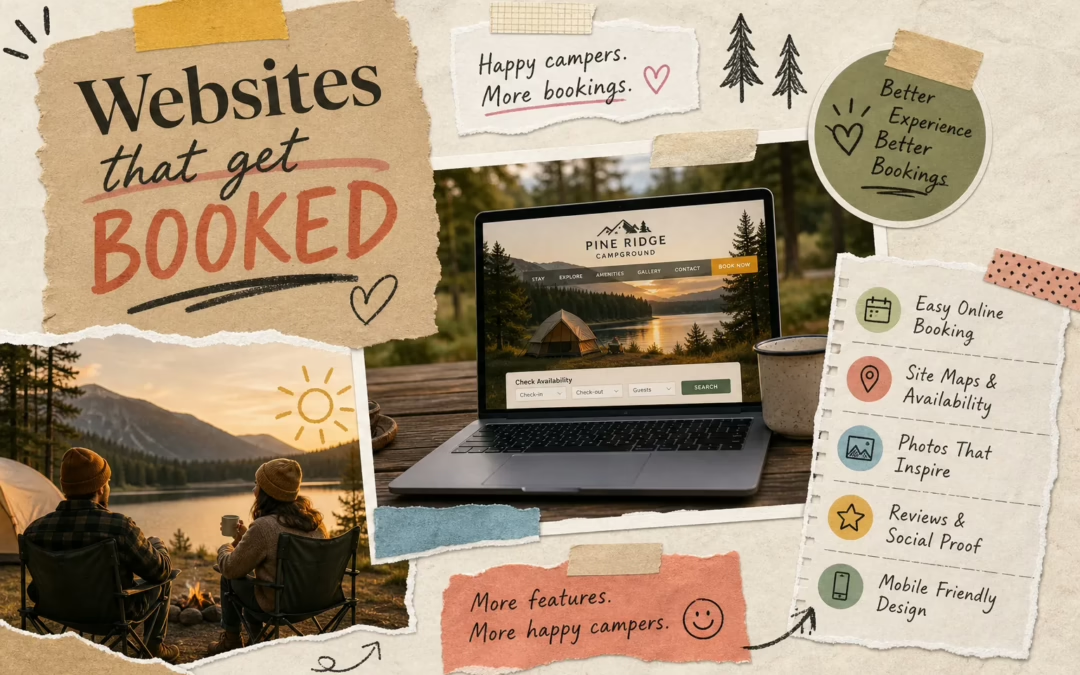
Blurry photos. No rates. A phone number hiding at the bottom. Then a “Contact us to check availability” button that belongs in 2009. That friction is exactly why would‑be campers bail and book somewhere else. If you’re asking what should a campground website include to get more bookings, start by removing that friction with clear photos, visible rates, and a real Book Now button.
When parks launch conversion‑focused websites with a proper booking flow, direct reservations jump. Many parks report double‑digit gains after launch. The problem is rarely traffic. It is what happens the moment a camper lands on a site that is not built to convert, and having true online booking is now a deciding factor for a sizable share of travelers.
That is why campground‑specific teams like CampgroundWebsites.com build conversion features in from day one. Below are the 13 must‑have elements that turn casual browsers into confirmed guests, plus how to prioritize what to do first.
What should a campground website include to get more bookings? The pages your campground site can’t afford to skip
1. A home page that answers the big questions immediately
Your home page has one job: make it clear what you offer, where you are, and how to book at a glance. Lead with a strong headline that includes your city and state, a hero photo or quick video that shows rigs on real sites, and a visible Book Now button above the fold. Skip vague taglines like “Your Home Away From Home.” They say nothing that helps a traveler decide.
- Headline with location and campground type, for example “Family RV park in Fredericksburg, Texas”
- Hero image or short looped video that shows sites, not stock art
- Primary Book Now button and a secondary See Rates link above the fold
- Three quick proof points: hookups, pull‑throughs, pet friendly
- Short directions or map preview so guests orient fast
Clarity beats cute copy. If a camper cannot tell what, where, and how to book in a glance, they will bounce.
2. Rates, site types, and live availability in one place
Campers comparison‑shop on price, so publish your rates or they will leave. Create a dedicated Rates page that lists site categories, seasonal pricing, and a live campsite booking calendar that shows real availability. A static PDF rate sheet is not enough for today’s traveler.
Publish your prices. Pair them with a working availability calendar or an embedded campsite booking engine so a guest can move from curiosity to checkout without hunting around.
3. Policies and FAQs that remove hesitation
Clear policies are a top trust driver. Spell out cancellations, pet rules, check‑in and check‑out times, quiet hours, deposit requirements, and any age or rig restrictions in plain language. A solid FAQ cuts down the phone calls that eat staff time and reduces cart abandonment from last‑minute doubts.
Visual content that sells the experience before anyone arrives
4. High‑res photo galleries organized by site type and amenity
One gallery with 40 random photos undersells your park. Organize by what guests care about: full‑hookup pull‑throughs, back‑ins, tent areas, bathhouses, laundry, pool, playground, camp store, and event spaces. Professionally edited images frequently improve trust and booking likelihood, and many buyers rank photos just behind clear policies in influence. CampgroundWebsites.com offers photo editing services so your property looks as good online as it does on a blue‑sky day. See our campground website design ideas for tips on photo organization and layout.
5. Site map and 360‑degree tour to reduce uncertainty
Campers want to know exactly where they will sleep in relation to the bathhouse, the playground, and the highway. Post a clean site map, interactive if possible, plus a simple 360 view or virtual walk‑through. Reducing the unknowns reduces friction. First‑time guests are more likely to book sight unseen when they can visualize the layout.
Keep captions informative and honest. Note rig length limits, tree clearance, and surfaces. The goal is confidence, not surprise.
A booking engine that gets out of its own way: what should a campground website include to get more bookings
6. Real‑time booking engine with streamlined forms
Instant availability plus online booking is the highest‑impact upgrade you can make. In practice, flows with real‑time inventory and instant booking see markedly higher completion rates. When you simplify the form and cut clicks, double‑digit conversion lifts are common because guests can finish while the impulse is hot.
7. Seamless integration that keeps guests on your site
Your campsite reservation software should embed cleanly without sending visitors to a new domain. Look for site‑type filters, an interactive map, mobile checkout, and automatic confirmation emails. Common options in 2026 include:
The right choice is the one that fits your operations and integrates smoothly with your RV park website design. Pricing and features vary by plan and over time, so confirm current details with each provider.
8. PMS and OTA sync to prevent double‑booking
Rate parity and availability headaches disappear when your reservation system is the master record. Connect your direct booking engine and OTAs so everything updates in near real time. Many systems can sync within minutes; check your provider’s documented window and make sure your PMS is treated as the source of truth so dates block across Hipcamp, Airbnb, and your website as soon as a reservation lands.
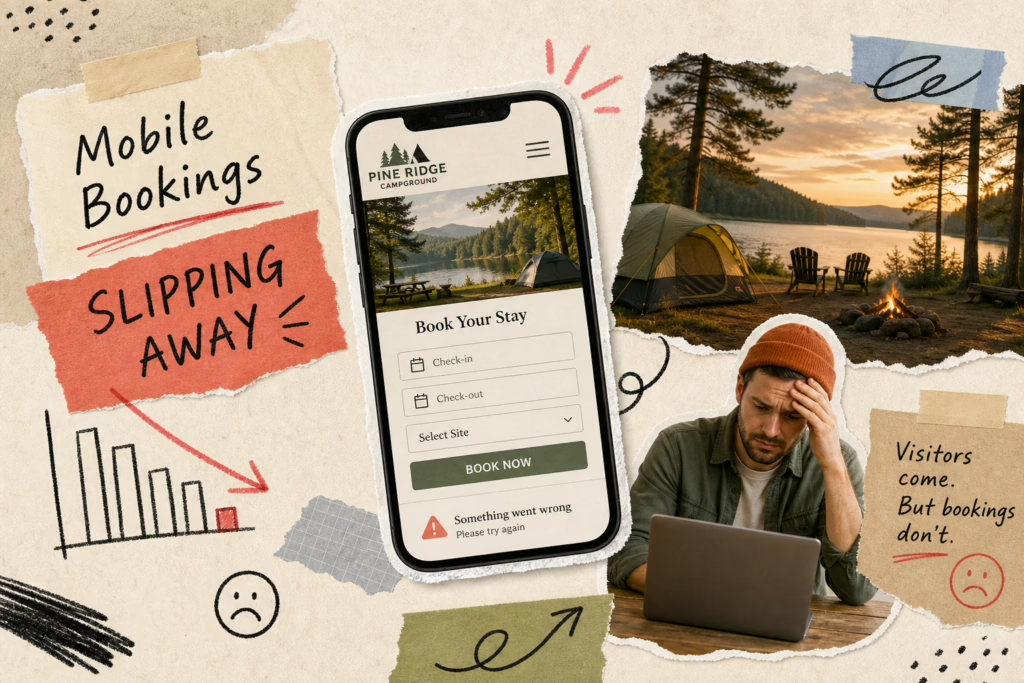
9. A mobile checkout that works on slow connections
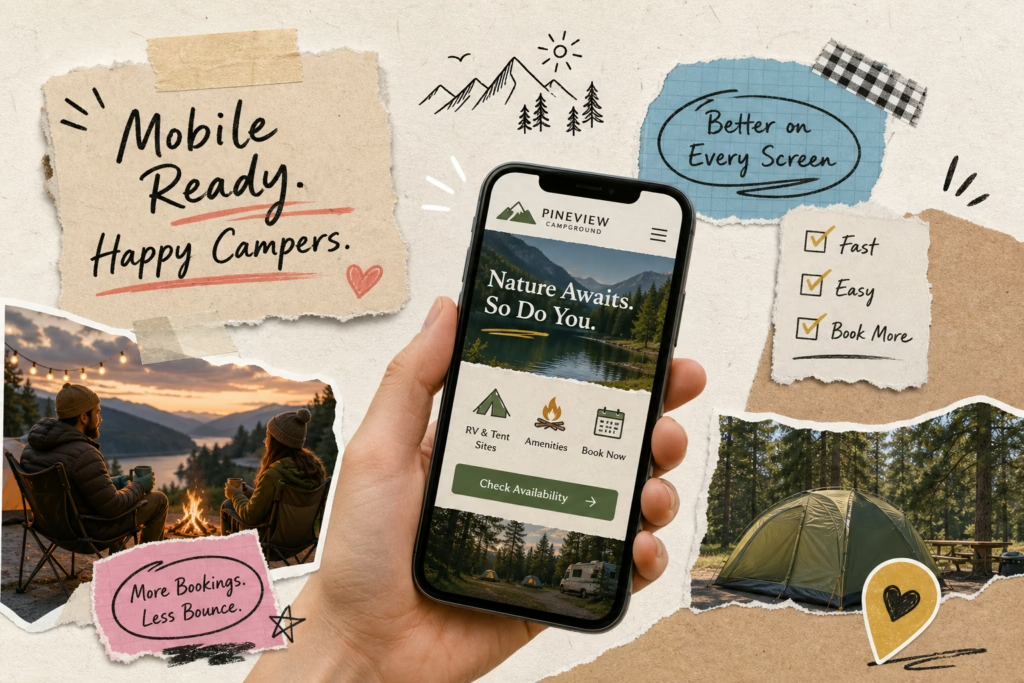
A majority of guests now start or complete bookings on a phone. That means big tap targets, autofill for address and card fields, minimal typing, and a page that loads fast on a 6‑inch screen with one bar of service. Test it on your own device in the parking lot. Mobile is the default, not the edge case. Learn more about why guests abandon non‑mobile sites and how to fix common issues in this write‑up on why mobile‑friendly websites retain more guests.
Trust signals and conversion elements that close the deal
10. Prominent, sticky CTAs where decisions happen
A “Book Now” button only in the top nav is not enough. Use a sticky CTA that follows the scroll, then add natural secondary CTAs on the rates page, photo galleries, and amenities list. Parks that intentionally place CTAs and streamline the flow routinely see higher rates of direct bookings after launch. Never make a guest hunt for the next step.
11. Reviews, star ratings, and authentic guest feedback
Surface social proof right on the site. Embed Google reviews, add a testimonials section with guest photos, and link to external platforms for transparency. A mix of 4‑ and 5‑star reviews reads more credible than a wall of perfection, and credibility is what gets a waffling traveler to click Reserve.
12. A local area guide that helps guests commit
Create a simple page with eight to ten nearby attractions, dining options, trailheads, fishing spots, and seasonal tips. Link to official resources and include drive times. This guide helps guests imagine the whole trip and quietly boosts SEO with location‑based keywords. Be the helpful local, not the hard sell.
Local SEO that puts your park in front of ready‑to‑book campers
13. Local SEO essentials: Google Business Profile and on‑page basics
A fully built Google Business Profile is the fastest way to show up in “campgrounds near me.” Verify it, choose the right categories like Campground and RV park, add real photos, update hours, and respond to every review. Consistent citations on directories such as Campendium, RV Life, and Yelp reinforce your local authority and help your map pack visibility. If you need a how‑to, this guide on how to optimize Google Business Profiles covers the key steps.
- Match your name, address, phone, and website everywhere
- Upload high‑quality photos and short video clips regularly
- Use Google Posts for openings, events, and seasonal updates
- Complete amenities and attributes like hookups, Wi‑Fi, and accessibility
On the site, get the fundamentals right. Write title tags and meta descriptions with your city, state, and property type, keep headers aligned to what campers actually search, and make sure pages load quickly on mobile. CampgroundWebsites.com bakes in campground SEO, submits your site to Google, Bing, and Yahoo, and delivers reporting so you can see what is working.
Pulling it all together without the guesswork
The implementation order that makes sense for most owners
You do not have to tackle all 13 items at once. Start with the engine that moves the revenue needle, then stack on the pieces that amplify it. If you’re wondering what should a campground website include to get more bookings, prioritize in this order and you will see momentum without burning out.
- Launch a real‑time booking engine that stays on your domain
- Make the entire site a mobile‑friendly campground experience
- Upgrade visuals with organized galleries, a site map, and a simple virtual tour
- Add trust signals: sticky CTAs, reviews, policies, and FAQs
- Tighten local SEO: Google Business Profile and on‑page basics
Why campground‑specific design beats a generic website builder
Generic builders do not know what a camper needs to see or how a campsite booking calendar should behave. CampgroundWebsites.com focuses on RV parks and campgrounds, which is why our sites launch with the right pages, photos, policies, CTAs, and a booking flow that converts. We offer transparent, all‑inclusive monthly plans that typically cover design, SEO, security, mobile responsiveness, maintenance, a set amount of monthly updates, optional photo editing, custom pages for cabins or events, and performance reporting. See our site for current plan details.
Use any reservation platform you want. We integrate cleanly with modern campsite booking engines or keep you flexible if you are not ready to choose. When you’re ready to hand off the web work, we make it easy. You run the park. We run the website. That is the shortcut to more direct bookings and fewer OTA fees.
Conclusion
A campground website missing these features is not neutral. It is leaking bookings to parks with cleaner flows, clearer pricing, and easier checkouts. The fix is straightforward once you know the order.
If you are still asking what should a campground website include to get more bookings, start with a real‑time booking engine and a fast mobile experience. Layer in organized visuals, clear policies, strong CTAs, and authentic reviews, then make sure your local SEO is pulling in ready‑to‑book campers. Do these well and your website stops acting like a brochure and starts working like your best performing booking channel.
If you want the done‑for‑you version, CampgroundWebsites.com builds all of this from day one. See examples and get pricing, and turn browsers into confirmed guests.