To design an effective campsite website, you’ll need strategies that boost user experience and bookings, particularly in the realm of campsite website design. This article covers mobile-friendly design, showcasing amenities, and more essentials to help your website stand out.
Prioritize A Mobile-Friendly Website Design for your Campground
A mobile-friendly website design has become a necessity in today’s fast-paced world. RVers often rely on their smartphones to make decisions on the go, and your website needs to cater to this trend. A mobile-friendly design ensures that your site adapts seamlessly to different screen sizes, providing an intuitive and enjoyable user experience.
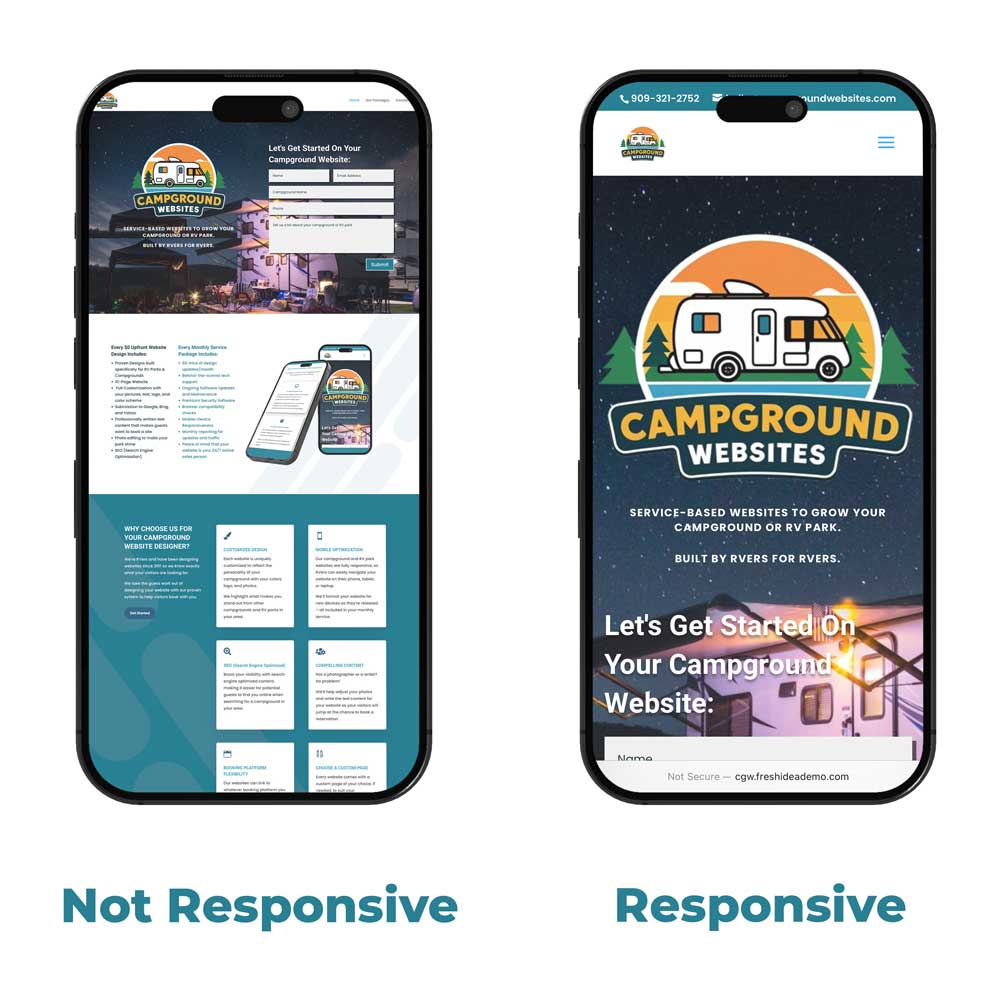
Your campground website needs to be mobile responsive and adjust to the size of the user’s device
Your campground website also needs to be lean and load quickly so that it’s still usable to someone with a limited cell signal. Having a video on the home page or large photos may seem like a good idea to show off every detail of your campground, but if it’s loading slowly on a mobile device when someone is considering you campground, then they’ll probably just close your website and try the next one on Google’s list.
Neglecting mobile optimization can limit your site’s accessibility, turning away potential guests. Responsive designs not only help in navigation but also reduce bounce rates, keeping visitors engaged for longer periods. Moreover, search engines favor mobile-friendly sites, driving more traffic to your website to optimize user experience.
Mobile-friendly maps offer practical benefits by providing real-time updates on trail conditions, closures, and other essential information, ensuring a smooth and informed adventure for your campers. There are various ways mobile analytics tools can further enhance user engagement and satisfaction by helping you understand user behavior.

Ensure your campground website is mobile responsive
Showcase Your Unique Amenities
One of the key factors that sets your campground apart from the competition is your unique amenities. Showcasing these features on your website can attract a diverse range of campers and remote workers. Providing detailed information on amenities, directions, and activities helps potential guests know what to expect during their stay.
Our team is made up of full-time RVers. Here are some common amenities we look for on a campground website:
- Pool / Hot Tub
- Dog Park
- Playground
- Clubhouse with games room (pool table, ping-pong, etc)
- Fitness Center / Gym
- Events Calendar (bingo, poker, karaoke, etc)
Offering a variety of recreational activities can cater to different preferences, from families looking for a fun getaway to adventure seekers craving excitement. Think about the ability to discover a lot of new experiences in nature, whether it’s hiking trails, fishing spots, or cozy campfires under the stars that will capture your mind.
Your website should paint vivid descriptions of these possibilities and highlight each thing that can work for everyone. Each of these activities works to create lasting memories that you can live. Hiring a campground website designer who is also an RVer helps your website speak directly to your target audience.
Different angles in photos can highlight the unique aspects of your campground. High-quality images can make potential clients feel as if they’re already experiencing the beauty and excitement your campground offers. This approach not only enhances your site’s appeal but also drives bookings by creating a strong emotional connection with visitors.
Use High-Quality Photos
A picture is worth a thousand words, and high-quality photos can significantly impact your website’s effectiveness. Real photos of your campground and amenities, rather than stock images, provide an authentic glimpse into what guests can expect.
On your campground website, we want to include images of…
- Entrance sign (so it’s recognizable as someone is approaching for the first time)
- Activities happening, and guests while they’re enjoying your campground
- Camp sites – a variety of photos showing different RV sites and/or locations depending on your park (back-in near the water, pull-through with a patio, tent sites, big-rig-friendly sites)
- Bathrooms and showers provide a comprehensive view of your facilities
- Pool, waterslides, hot tub
- Your plaground or kids area in the club house
- The view of the mountains or proximity to the water
- That thing that makes your campground unique from others in your area
For our new clients, we’ve created a “shot list” of all the shots you need from your photographer for your website. Digital photos are free and unlimited, so we’d rather sort through 50 great photos to decide which to use for your campground website than try to make 10 or 12 stretch to fit the images your website needs.
Include guests in your photos
We’re not actually visiting your campground because of the other guests, but we’d love to see families enjoying the playground, guests around the community fire, or people playing pickleball.
You don’t have to ask your guests to clear the pool while your photographer takes photos. We want to see the pool, but we also like to see the community of guests at your campground enjoying your pool, clubhouse, or tennis courts.
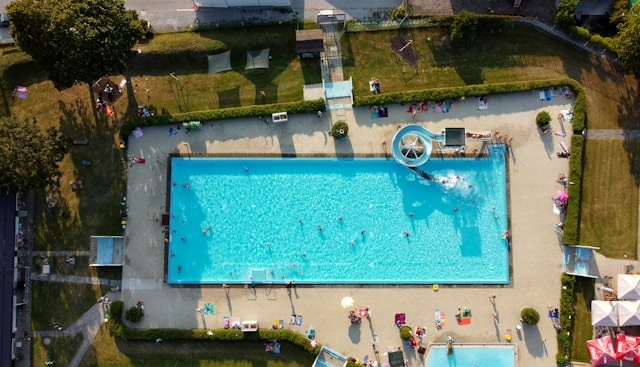
Include campers using your facility, not just empty photos
Hire a professional photographer for campground website photos
They can choose the right lighting, angles, and arrangements to highlight the best features of your campground. Technology has advanced to a point where beautiful photos have worked to ensure that your website always looks its best.
Photos help set the right expectations, reducing the likelihood of complaints or negative reviews. Accurate, appealing pictures (not stock photos) make potential campers more likely to be satisfied with their choice and recommend your campground to others.
It’s a great way to showcase the beauty of your site and attract more bookings.
You may have a friend who takes family photos or another friend who has great sunset photos on their iPhone, but we would recommend calling the local real estate office and hiring their real estate photographer for an afternoon. A real estate photographer understands how to make properties look their best and deal with both inside and outside lighting. Simply send them the shot list we provide for all new website clients, and they’ll have a checklist for what you need.

Hire a local real estate photographer to take photos for your campground website
Campground Website Photos: Landscape (Horizontal) Photos, Not Portrait (Vertical)
We have some clients who are great photographers, and it is pretty amazing what can be accomplished with an iPhone. If you’re a DIYer, that’s great, AND we need photos to be horizontal, not vertical.
You might be tempted to hold up your phone and snap a great photo of the sunset at your campground. That photo may look great as a social media post, but if you’d like it on your website, take a horizontal version.
The layout of your campground website needs to work on BOTH mobile phones and desktops/laptops, so we need horizontal photos. Here’s how to get your RV park website to work on phones.
Provide an Interactive Campsite Map
An interactive campsite map (or simply a PDF map – doesn’t have to be interactive) enhances user experience by showing the layout and structure of your camp campground, making navigation easier. An organized map with clear labels and color-coding can significantly improve the overall camping experience. Someone with kids may request a site close to the playground, while a couple without kids may choose one that is further from the playground, for instance.
Having an idea of where a site will be located when a reservation is made reduces the need to shift to another site on arrival.
Customized maps can include details like accessibility features and pet-friendly areas, catering to various needs. Such detail adds value and ensures guests have all the necessary information at their fingertips.
A map also aids mobile navigation. Campers can use their smartphones to access the map, making it easier to explore the campground and find their way around. This can be especially helpful for first-time visitors or those unfamiliar with the area, enhancing the overall experience and satisfaction.
Enable Online Reservations
Enabling online reservations is crucial for increasing convenience and boosting bookings. They allow guests to plan trips in advance, providing instant confirmations and reducing your staff’s administrative workload, ensuring everything is ready.
Third-party campground reservation software can streamline booking with features like online check-in, payments, and interactive maps. These systems are user-friendly and provide a seamless experience for both the campground and the campers.
An online reservation platform can help you reach a larger audience, especially those who prefer to book online trips. By offering an easy and efficient way to make reservations, you can enhance customer satisfaction and drive more bookings to your campground.
It’s not essential to have reservations software. Many campgrounds still prefer to take bookings over the phone or by email. Make it extremely clear to your guests on how to make a reservation. On all of our campground websites, we add a “Book Now” button in the top menu that either goes to the reservation software or to a contact page with instructions to email or call the office.
Display Contact Information Prominently
Prominently displaying contact information on each page facilitates quick communication with potential customers. Easy access to contact information reduces barriers for potential customers, increasing the likelihood of a booking.
A clickable phone number enhances user experience by allowing immediate contact. Providing multiple communication options, including email and a physical address, expands trust and credibility. If they’re looking to visit a particular attraction near your campground, then making your address accessible allows a potential visitor to check the distance from your campground.
Ensure your contact information is easy to find, whether in the header, footer, or a dedicated contact page. This approach ensures that potential guests can quickly and easily get in touch with you, increasing the likelihood of converting inquiries into bookings.
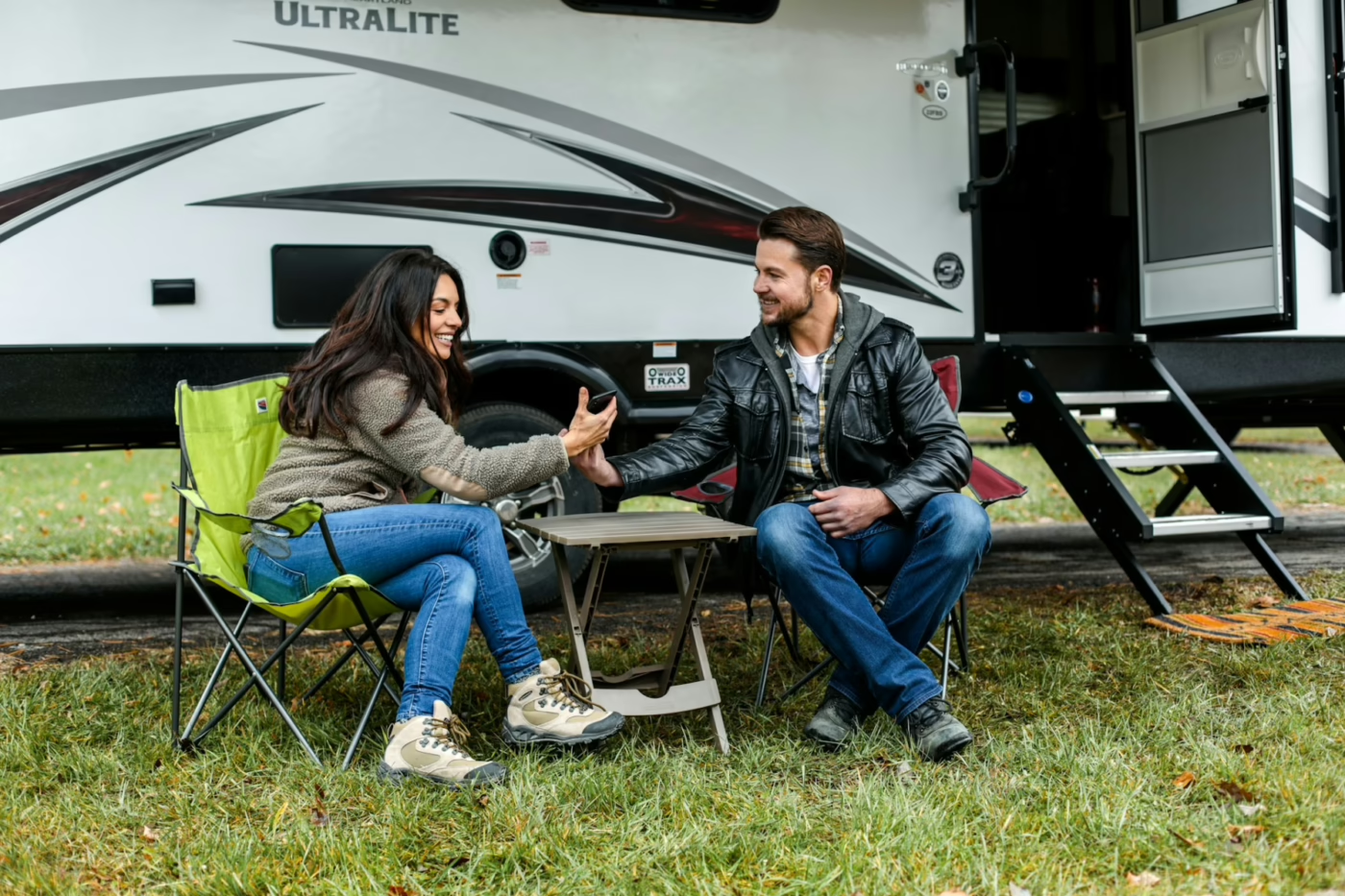
70% of campers find their next campground on their phone
Avoid Common Web Design Mistakes
Avoiding common web design mistakes is crucial for a user-friendly and visually appealing website. Many campground websites lack intuitive navigation, complicating the search for essential information. A frequent error in web design is clutter, which distracts users and complicates their experience.
What to include on your campground website home page:
Not everything needs to be at the top of the home page. We often have clients who think that if they want to promote something (an upgraded service, or camp t-shirts, for instance), they could add it as close as possible to the top of the home page.
The challenge with this mindset is that when they’re trying to promote a charity 5k for instance, they stick THAT on the top of the home page also. The t-shirts get bumped down, along with the reminder for no check-ins after sunset, and that poker tournament, and it’s only a matter of time before the home page becomes a massive catch-all of things that need to be highlighted, bolded, prioritized, flashing, and pop-up mess.
Your home page is like a directory – a list of the sections that people can find full details about on your website. As an example, rather than listing all of the attractions in your area, instead say “There’s plenty to do when you visit our campground,” with a button to “See Our Area Attractions.” From there, we can have a page that highlights all of the favorite area attractions, things to do with kids, and favorite local restaurants.
When to use other communication methods other than your website:
It’s also important to remember that your home page is not a place for “Reminders.” Posting a “reminder to pick up your dog poop” or “A reminder that there won’t be poker this week” on your home page is ineffective because the person who needs to hear that reminder is unlikely to visit your website regularly to check for new reminders.
A better way to send reminders is to send an email.
We recommend maintaining two email lists:
- A list of seasonal campers
- A list of people who have visited before, but aren’t seasonal
This allows you to send a message to the person who needs to hear it when they need to hear it (Like “please pick up after your dog” to your seasonal guests) without cluttering your home page, where it won’t likely be seen anyway.
You’ll also send out a confirmation email when someone makes a reservation. Here are the dates of your reservation, here’s our address, and a few reminders to make the most of your visit – things like “Please no check-ins after sunset” or “Visit the office on arrival to pick up your gate card for the pool.”
Name your campground with your guests in mind. What name will make them want to visit?
Outdated Website Design Elements: What to avoid
Outdated designs can deter potential customers, as they reflect a lack of attention to current trends. Consistent branding across pages is crucial for maintaining a strong brand identity and avoiding confusion. A professional logo design service can help you avoid common pitfalls and achieve a functional, attractive website for designers.
- Fluorescent colors. Use a color scheme that matches your logo, not fluorescent colors to “Grab attention”
- Flashing or moving GIFs. Waving animated flags, moving cartoon characters, or flashing banners instantly indicate to a guest that your website style is years behind.
- REALLY small photos to keep load speed minimal. Yes, photos that are too large will slow down your website, but we’re no longer using dialup to load photos, so give visitors photos that make them want to book with you.
- “Click here to view our website on mobile” – your website should be mobile responsive, meaning that it recognizes the device that a visitor is using and automatically adjusts to their screen size
- Stockphotos. We don’t need to see a generic “model” family sitting in a pool, a stock couple smiling around a campfire, or a sunset from a stock library. We want to see YOUR pool. We want to see what YOUR campground is like. Your guests want to know what makes YOUR campground unique, not a series of photos you’ve licensed from somewhere else.
- An outdated “Copyright” date at the bottom of your website. It would be better not to show a date than to show one that suggests you haven’t updated your website in 5 or 10 years. If you’re not keeping your website in top shape, we’re concerned the same may be true of your campground.
- Autoplay music or sound effects. More likely to startle an unsuspecting visitor than encourage them to book.
Focusing on simple design, ease of use, and modern design trends creates a positive user experience and encourages more bookings. Remember, a well-designed new website is a powerful tool for attracting and retaining campers.
Leverage SEO Optimization
SEO strategies are vital for boosting visibility and driving direct bookings for campgrounds. Here are a few things to consider:
- Most travelers search for accommodations online with words like “Campgrounds in…” or “RV Parks near…”
- A strong SEO strategy can help your website rank higher in search results.
- Mobile-optimized sites enjoy better visibility due to Google’s preference for mobile-first indexing.
Targeted keywords throughout your website help search engines understand your content and improve search rankings. Local SEO strategies, like geo-targeted keywords (Campgrounds near <City Name>), make your campground more discoverable in location-based searches. High-quality content paired with effective backlinking can significantly improve your search engine ranking.
ALL of our campground websites include built-in SEO. There are no extra charges for that, because what’s the point of having a website if people aren’t going to be able to find it? Find out what else is included in our campground website service packages.
A Google Business Profile with accurate contact information and high-quality images is essential for local search success. Regular updates and maintenance of a good mobile-friendly website lead to sustained improvements in mobile SEO performance.
Google is also a great place to ask your guests to leave a review. We’ll then be able to feature those reviews on your website for guests to see.

SEO suggestions for campground websites
Keep your campground website information current
Keeping your camping website information current provides visitors with accurate, up-to-date details. A website calendar that shows upcoming events ensures your site always has up-to-date information. Updating your pricing annually avoids surprises for your guests when they arrive or call to book.
Update your website photos to reflect any changes to landscaping, pools, or other facilities. A website service package that includes updates allows you to manage changes easily without having to learn how to update the site yourself. This setup ensures a seamless process.
Regular updates ensure potential and returning campers have the most current information today, enhancing their experience and satisfaction each month and over the years.
Summary: Campground Website Design Ideas
In summary, a well-designed campsite website is essential for enhancing user experience and driving bookings. You can create a compelling online presence by prioritizing mobile-friendly designs, showcasing unique amenities, using high-quality photos, and providing a map of your campground.
Displaying contact information prominently, avoiding common web design mistakes, leveraging SEO optimization, ensuring ADA compliance, and considering online reservations are all critical steps to success. Implement these best practices to transform your campsite website and welcome more happy campers.
Choose a website service that understands campgrounds and will look after all of the technical details for you so you can focus on your business instead of trying to learn to edit a website.
Frequently Asked Questions about Campground Website Design
Can I just use the free website or webpage that comes with my campground reservation software?
While something is better than nothing, using the default landing page for your campground reservation software is insufficient in attracting Google’s attention and having complete control over the information you provide someone who is looking for campgrounds or RV parks in your area.
It will also mean that if you change booking software in the future, you’ll also have to change your website since they’re tied together. Our website packages allow you complete flexibility on which booking software you use. Here’s a full comparison of using a free campground reservation website.
Why is mobile-friendly design important for campsite websites?
Mobile-friendly design is essential for campsite websites as it enhances user experience on smartphones – especially for RVers who are traveling, improves navigation, and increases visibility in search engine results, ultimately driving more traffic to your site.
How can high-quality photos impact my website?
High-quality photos significantly enhance your website by accurately representing your campground, setting the right expectations, and minimizing complaints. Additionally, they attract more bookings by beautifully showcasing your site’s unique features.
What are the benefits of enabling online reservations?
Enabling online reservations significantly enhances customer convenience while reducing administrative workload. This system also allows for instant confirmations and broadens your reach to a larger audience. Here are some of the most common campground reservation software options.
Why is SEO optimization important for my campsite website?
SEO optimization is crucial for your campsite website as it enhances visibility and increases direct bookings by improving your search engine ranking. Implementing targeted keywords and local SEO strategies will effectively attract more visitors to your site.
How can I get more campground reviews to show on my campground website?
Remember to ask your guests to leave a review on Google, incentivize your staff to remember to request reviews, and make it as easy as possible for people to leave reviews – give them a QR code at your campground check-in or a simple link in an email you send, they leave thanking them for their visit. Here are more ideas to get more reviews for your campground.