What pages and features should a professional campground website include? It’s a more specific question than most park owners realize when they first sit down with a designer. The difference between a site that fills sites and one that collects digital dust comes down to specific pages and specific features, not fonts or color palettes. Guests size up a property fast, and a missing rates page or a broken “Book Now” button sends them straight to a competitor down the road.
The best campground websites are built around what guests actually need at each stage of their decision: awareness, consideration, and booking. That’s a very different design philosophy than “make it look pretty.” At RV Park and Campground Websites (Built By RVers), we’ve been on both sides of that decision, as actual RVers who’ve hunted for campgrounds online and as web designers who’ve built high-performing sites for parks since our founding. That combination shapes every page structure and feature choice we recommend.
This guide breaks down every page and feature a professional campground website needs, explains exactly why each one earns its spot, and closes with a ready-to-use site map framework you can hand to any designer or vendor.
What pages should a professional campground website include, core pages from day one
These aren’t optional extras. They’re the structural backbone of a site that converts visitors into reservations. Each page has a specific job to do for the guest and a different conversion function for you as the owner.
Homepage: first impression and booking trigger
A high-performing homepage does three things within the first scroll: tells guests who you are, where you are, and how to book. The essential elements are a strong hero image, your property name and location, a headline value statement, and a prominent “Book Now” CTA that links directly to your reservation system. Everything else is secondary. A cluttered or vague homepage kills conversions before the guest has read a single word of copy, because confusion is the enemy of action.
Rates and amenities page: the page guests visit before they book
This page answers the two questions every potential guest has: what does it cost, and what do I get? You need to list site types, full hookup, partial, and tent, along with nightly, weekly, and monthly rates, pet policies, and a clear amenity rundown. Hiding your rates or making guests call to find out is a trust killer, especially for RVers who research heavily before leaving home. Campgrounds that publish rates upfront consistently see stronger trust signals and fewer abandoned sessions, experienced travelers who can’t find pricing tend to assume the worst and move on.
About us page: the human story behind the campground
Guests are choosing a place to sleep outside. They want to know who owns it. A well-written About page builds trust, conveys the personality of your park, and highlights what makes it a genuinely unique destination. This page is especially important for family-owned parks competing against chains, because the human story is the one thing a corporate-owned property can never replicate.
Contact and directions page: don’t make guests guess how to find you
This page needs a phone number, email, physical address, and an embedded Google Map. It also carries a significant local SEO benefit: consistent NAP (name, address, phone) placement signals geographic relevance to Google’s local ranking algorithm. Make this page easy to find from every other page on the site, because a guest who can’t figure out how to reach you will book somewhere else before they pick up the phone.
Booking and reservation features that turn visitors into paying guests
A campground website without seamless booking integration is a digital brochure. Brochures don’t fill sites. The revenue engine of your website lives in this section, and getting it right is worth more than any design decision you’ll make.
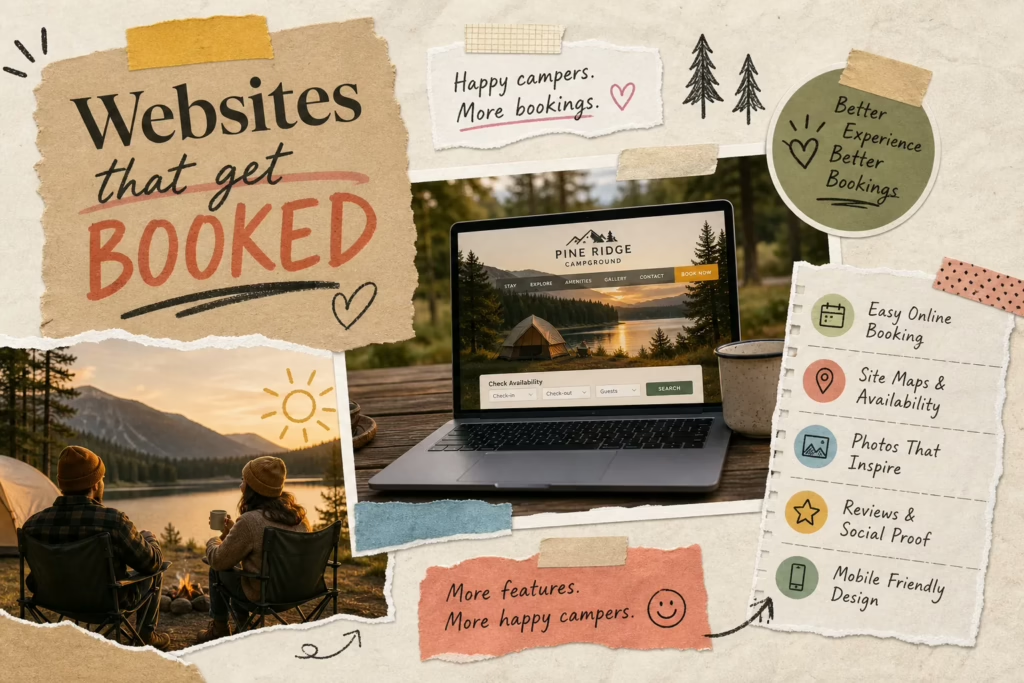
Online reservation integration: what to look for in a booking engine
The leading platforms used by campgrounds include Campspot, ResNexus, ReservationKey, and WebRezPro. Each offers a different mix of features and pricing, but two capabilities are non-negotiable: two-way availability syncing to prevent double bookings across OTAs, and built-in payment processing. Properties with seamless, distraction-free booking engines tend to see meaningfully higher checkout rates than those with clunky or multi-step reservation flows, that gap represents real revenue, compounded over an entire booking season.
Availability calendar and flexible booking display
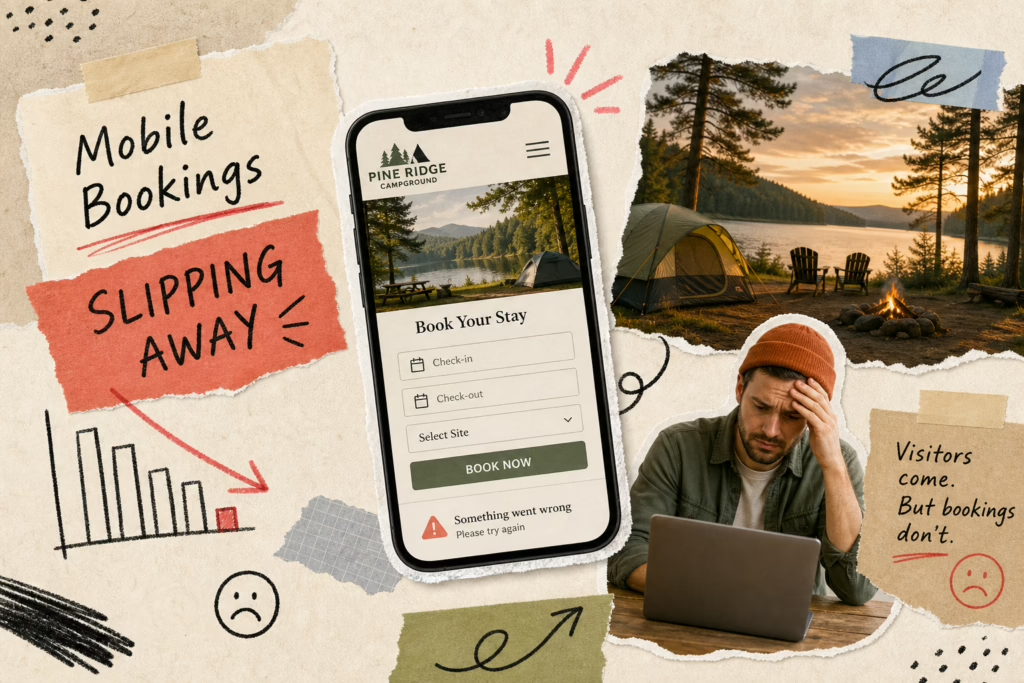
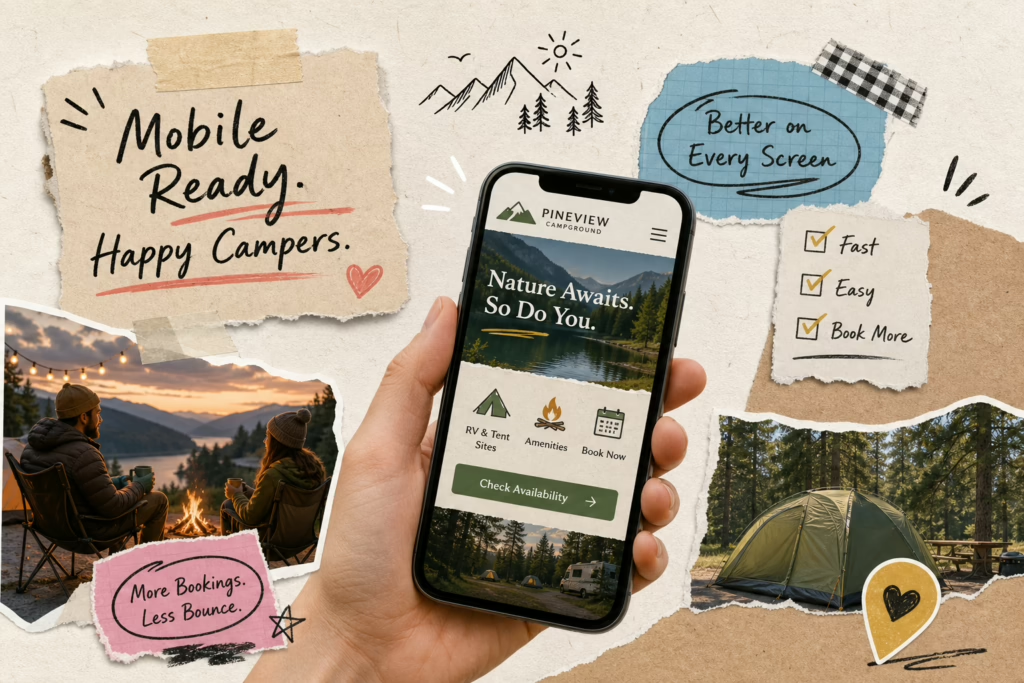
A live availability calendar reduces inbound phone calls, sets guest expectations, and makes the booking process feel frictionless. When guests can see open dates at a glance, they move through the reservation funnel faster and with more confidence. This feature also needs to be fully functional on mobile, since a large share of campground searches happen on phones while people are mid-trip planning.
No vendor lock-in: why flexibility matters for campground owners
A professional campground website should integrate with whatever reservation software you choose, without forcing you into a specific platform. Being locked into one system creates real problems as your business grows or as better tools emerge. At Built By RVers, we build sites with booking platform flexibility as a core principle, because your website should serve your business, not the other way around.
Visual features that sell the stay before guests even arrive
Campground guests are buying an experience. That experience has to be visible on your website before they hand over a credit card number. Visual and interactive elements build desire and trust at the same time, and skimping on them is one of the most expensive mistakes a park owner can make.
Photo gallery: one of the highest-impact investments on a campground site
Your photo gallery should cover individual site types, bathhouses, recreation areas, scenery, seasonal shots at different times of day, and the surrounding natural environment. In our experience building campground sites, photo quality is the factor guests cite most often when explaining why they booked, or why they didn’t. Low-quality or absent photos are a consistent driver of early abandonment. Your photos are doing sales work 24 hours a day. Invest in them accordingly. For layout and UX concepts that increase reservations, see Campground Website Design Ideas: Book More Reservations.
Interactive campsite map: helping guests choose their perfect spot
An interactive site map lets guests see which sites are available, where they’re located within the park, and what amenities are nearby. For experienced RVers with specific preferences, pull-through sites, back-in, proximity to bathhouses, this feature removes a major friction point from the booking process. It also keeps guests on your site longer, which improves your SEO signal and gives the park more time to make its case visually. For a straightforward how-to, see a practical guide on creating a campground map in four simple steps.
Virtual tours and video content: the immersive upgrade
360-degree virtual tours and short walk-through videos reduce booking hesitation by letting guests preview the property in a way that static photos can’t match. In parks where we’ve added virtual tours, time-on-site metrics consistently improve, and they’re particularly high-value for resort-style parks and glamping properties where the premium experience needs to be felt before the booking is made. These aren’t required on day one, but they belong on the roadmap.
Key features a professional campground website should include: performance and SEO
A beautiful campground website that loads slowly, breaks on mobile, or doesn’t show up in Google is a liability, not an asset. These under-the-hood requirements determine whether your site actually performs where it counts.
Mobile performance and Core Web Vitals: the numbers that matter
Every campground site should meet Google’s current Core Web Vitals benchmarks: LCP at or under 2.5 seconds (how fast your main content loads), INP under 200ms (how quickly the page responds to interaction, Google replaced the older FID metric with INP in 2024), and CLS at or under 0.1 (how stable the layout is as the page loads). These metrics directly affect both your search rankings and your booking completion rates. Google’s own research has shown that 53% of mobile users abandon sites that take longer than 3 seconds to load. In peak booking season, that’s a meaningful number of lost reservations.
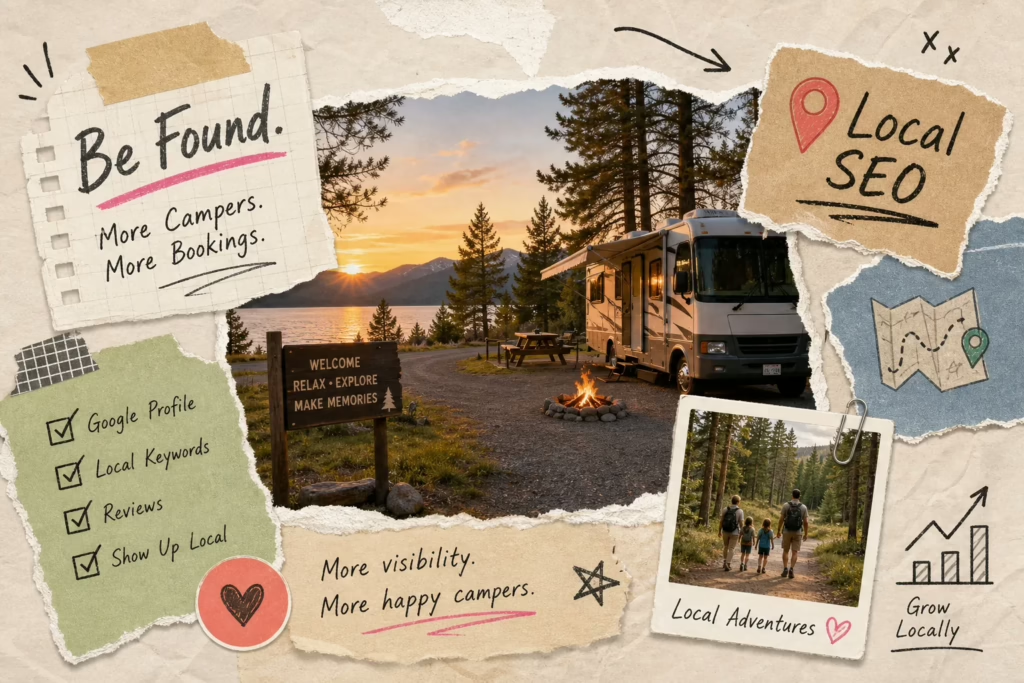
Local SEO and schema markup: getting found by guests who are actively searching
Your campground site needs LocalBusiness schema markup with the Campground subtype, consistent NAP placement in the site footer, location-specific keywords in titles and headers, and AggregateRating schema markup so review stars appear directly in search results. These elements help your campground appear in Google Maps results for searches like “RV parks near [city]” or “campgrounds near [landmark]”, exactly the intent stage where guests are ready to book. Your Google Business Profile works alongside these on-page elements and should be verified, categorized correctly, and kept current.
Security, SSL, and ongoing maintenance: the invisible protection layer
An SSL certificate, regular platform updates, and security monitoring are non-negotiable for any site that accepts guest inquiries or connects to a booking engine. This is an area where many small campground owners get burned by generic web designers who hand off the site and disappear. Without ongoing maintenance, plugins fall out of date, vulnerabilities open up, and the site that was working fine in the spring is broken by summer when you need it most.
How Built By RVers covers all of this in one monthly package
Every page and feature covered above represents a real decision a campground owner has to make, or pay someone else to make. The question that follows is who actually builds campground websites that include all of it, reliably and affordably, without requiring you to manage a dozen separate vendors.
What the $0 upfront model means for campground owners
RV Park and Campground Websites (Built By RVers) charges $0 upfront for the initial 8-page custom website build. The flat monthly service fee covers design updates, security monitoring, SEO, mobile optimization, and technical maintenance. For small park owners, this removes the two biggest barriers to getting a professional site: the upfront capital cost and the ongoing technical burden. You send an email to update your site; the team handles everything else. Full details on what’s included are available directly through Built By RVers. For a deeper look at practical design choices that drive bookings, read How to Design an RV Park Website That Gets More Bookings.
What’s included in the standard package
The standard package delivers custom design tailored to your campground’s brand, professionally written booking-focused content, SEO setup including sitemap submission to Google and Bing Search Console, and mobile-responsive design that adapts across device types. Booking platform flexibility is a core feature, with no lock-in to any specific reservation software. Optional add-on pages include event calendars, cabin rental pages, seasonal lease pages, and venue pages for parks that host gatherings. Every feature in this package maps directly to the conversion functions covered in this article.
Why niche expertise changes everything
Built By RVers was founded by actual RVers with deep web design experience in the outdoor hospitality space. Every page structure, content choice, and SEO strategy reflects real knowledge of how RVers research and book campgrounds, not generic hospitality web design theory. The difference shows up in the details: which amenities get featured above the fold, how rates are presented to reduce hesitation, and which local search terms actually bring in guests who are ready to reserve. A general-purpose web designer who has never set up a campsite doesn’t know those details. We do.
Your campground site map and feature spec, ready to use
Here’s the prioritized page structure you can take into any conversation with a designer or vendor, ordered by conversion impact:
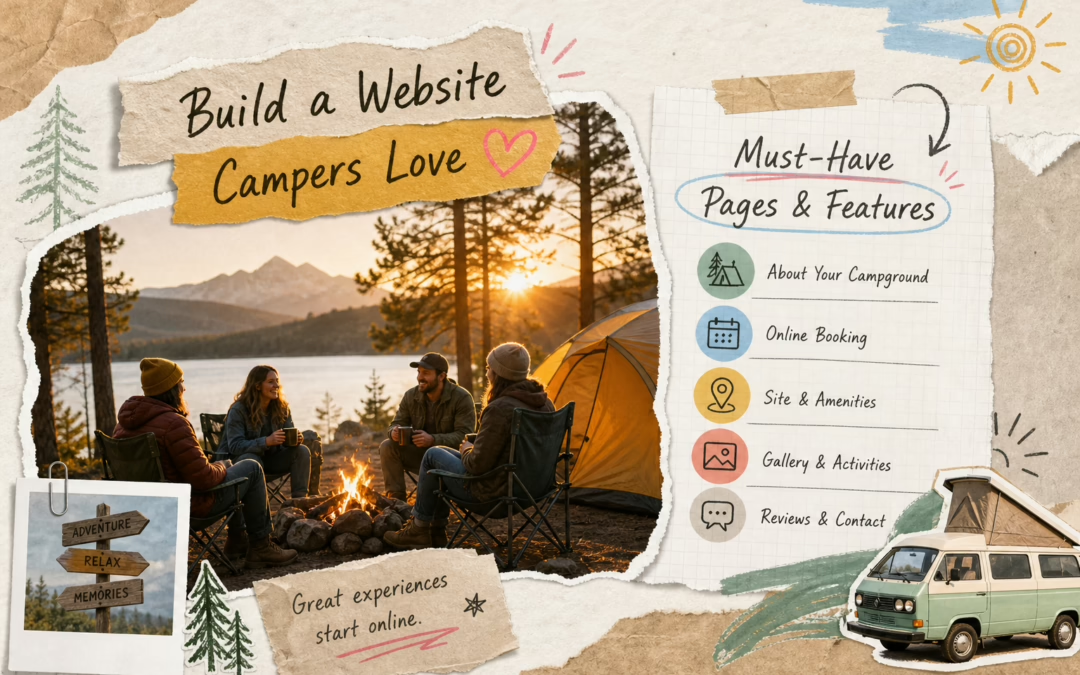
- Homepage: first impression, location clarity, and booking trigger
- Rates and amenities: answers the two pre-booking questions
- Photo gallery: sells the experience visually
- Reservation and booking page: the revenue engine
- About us: builds trust and differentiates from chains
- Contact and directions: local SEO anchor and accessibility baseline
- Local area and attractions: destination context for undecided guests
- Optional add-ons: events calendar, cabin rentals, seasonal leases
The priority order reflects the guest decision journey. A visitor lands on the homepage, wants to know what they’re getting and what it costs, then looks at photos, then books. Every additional page supports one of those stages.
When you brief any web designer or service, require confirmation on these non-negotiables before signing anything; if you need help vetting vendors, consult How to Choose a Campground Website Designer, Campground Websites:
- Booking engine integration with two-way availability sync
- Full mobile responsiveness with Core Web Vitals compliance
- SSL certificate and ongoing security monitoring
- Local SEO setup with schema markup and NAP placement
- Photo gallery with space for site-type and amenity shots
- Monthly site update support included in the service agreement
Any vendor who can’t confirm all six of those items isn’t the right partner for a campground website that actually performs.
A professional campground website is a solvable problem
If you’ve worked through this guide asking what pages and features should a professional campground website include, you now have a complete answer, and a checklist you can hand to any designer. It’s about having the right pages, in the right order, doing specific jobs. Core pages set the foundation. Booking integration drives revenue. Visuals build trust. Technical performance determines whether any of it gets seen. None of this is guesswork when you know what you’re building toward.
Built By RVers handles every item on this list under one affordable monthly roof, built by people who understand the campground industry because they’ve lived it. If your current site is missing pages, skipping features, or failing on mobile, that’s not a design problem. It’s a revenue problem with a clear solution.
See what a campground website built by actual RVers looks like at RV Park and Campground Websites (Built By RVers) and find out how many items on that feature spec are already covered on day one.