Many campground owners struggling with empty sites aren’t losing bookings because advertising doesn’t work. They’re losing them because they’re putting money into channels they don’t fully understand, crossing their fingers, and hoping the reservations roll in. The result is a lot of wasted spend and a lot of frustrated owners who’ve written off certain campground advertising ideas as duds, when the real problem was execution.
This is a no-nonsense comparison of the six biggest promotion channels available to RV parks and campgrounds right now. You’ll get real costs, conversion expectations grounded in industry benchmarks, and a clear-eyed look at where each channel wins and where it quietly burns your budget. One thing to keep in mind before we dive in: the best campsite advertising strategy in the world still fails if your traffic lands on a weak website. That point becomes very relevant at the end.
Campground advertising ideas for Facebook and Instagram: high reach, high visual payoff
Paid social is the most accessible entry point for campground promotion, and it’s easy to see why. Facebook and Instagram let you put scroll-stopping photos of your park in front of people who are already daydreaming about their next trip, before they’ve typed a single search query. The risk is that “accessible” has a way of becoming “easy to waste money on.”
The creative formats that work best are short-form video: Reels under 15 seconds, drone footage of your sites, and seasonal before/after scenes. Static photos still have a place, but video drives significantly more engagement on Meta platforms and converts scrollers into clickers at a higher rate. Geo-targeting is non-negotiable. Set your audience radius to cover your primary feeder markets, typically the drive-time zones where most of your guests originate, and layer in retargeting for past website visitors using the Facebook Pixel. This is where shoulder-season promotions to warm audiences really earn their keep. For a complete playbook on social channels and creative examples, see Campground Social Media: Get more campers to your campsites!
On costs: US Facebook CPC for camping-adjacent audiences runs $0.70 to $2.00, with CPM landing between $16 and $24. Costs climb fast during summer and holiday weekends when competition spikes. A realistic click-to-booking conversion rate is 2, 5%, but only when the landing page is doing its job. That qualifier matters more than most owners realize.
Where social ads lose campground owners money: weak creative, audiences with no geographic filter, and sending traffic to a slow or outdated website that kills conversions before the visitor even sees your rates. More on that shortly.
Google Ads campground advertising ideas: capturing campers who are ready to book
If Facebook finds campers while they’re scrolling, Google finds them while they’re typing “RV parks near Smoky Mountains” into the search bar. That’s a fundamentally different buyer intent, and it’s why Google Ads often delivers stronger direct-booking ROI despite higher CPCs.
The keywords that matter are transactional: “campgrounds with hookups [state],” “RV parks near [city],” “pet-friendly campsites [region].” Informational queries like “best camping gear” waste budget and attract browsers, not bookers. Match types matter here. Phrase and exact match keep your spend focused on people who are ready to reserve. Geographic targeting is non-negotiable for campgrounds since nearly every booking starts with a location-based search.
CPC for commercial camping and RV search terms runs $2.00 to $6.00 or more. Compare that against OTA commission rates, which typically range from 15, 20% per booking depending on the platform (some, like Hipcamp, charge closer to 12.5, 15%), and Google Ads starts looking cost-competitive when you’re driving direct reservations. Conversion rates of 2, 6% are achievable on a clean, fast landing page. For practical campaign setups and bidding strategies specifically tailored to campgrounds, consider this guide to Google Ads strategies for campgrounds.
Display and remarketing work well as a lower-cost support layer. Display CPMs run $4, $12; YouTube sits at $10, $18. Use these to follow up with people who visited your site but didn’t book, not as your primary acquisition push. Get your search campaigns to a positive return first, a target conversion rate above 3% is a reasonable starting benchmark, then layer these in.
Campground advertising ideas for directories and listing platforms: the slow-burn channel
Many campground owners set up their directory listings once and never return to them. That’s a costly oversight, because done right, these platforms deliver steady referral traffic without ongoing ad spend. Done wrong, they’re digital dead ends with a blurry photo from 2019 and zero reviews.
The platforms worth your attention break down this way. Hipcamp is strong for private and glamping-style listings, charging 12.5, 15% commission per booking in exchange for access to a highly engaged outdoor audience. Hipcamp’s listing and commission details explain current fee structures and what hosts can expect. Spot2Nite reports strong checkout-to-booking completion rates for integrated parks, along with broad reach among the camping and RV community; their work on conversion-focused CTAs is a useful reference for parks looking to streamline direct booking flows. Spot2Nite’s conversion-focused Book Now approach shows how small UX changes at checkout can lift completion rates. Recreation.gov drives high volume for public-land-adjacent parks. Good Sam reaches an RV-specific audience with built-in trust. Campendium functions more as a discovery and review platform than a direct booking driver. State tourism board directories also belong here, primarily for the SEO link equity they pass to your site.
The catch with all of these: commission fees, limited brand control, and dependence on a third party’s algorithm. Use directory and OTA listings as one channel in a diversified campgrounds digital marketing mix, not as your entire strategy. They’re excellent for passive reach; they’re a liability if they’re your only plan.
Sponsorships and influencer campaigns: the word-of-mouth multiplier
Traditional sponsorships and influencer campaigns run on the same core principle: borrow someone else’s trust to reach a new audience. For campgrounds, this channel punches above its weight when you go in with a clear plan and measurable goals.
One well-documented campground promotion example comes from Pennsylvania’s Hershey region, where a campground used a creator listing service to identify travel influencers, hosted a campfire meet-up, provided a photo-ready site, and locked in deliverables with a simple contract. The result was a meaningful jump in bookings during peak season and a reusable content library of drone shots, Reels, and testimonials. The model works because you’re paying in kind (a free stay) rather than in cash, and the content keeps working long after the visit ends. Track everything with UTM links so you know exactly which influencer drove which bookings.
Local event sponsorships, trail races, fishing derbies, regional outdoor festivals, build brand recognition with exactly the right audience. Costs range from a few hundred dollars for banner placement to a few thousand for title sponsorship. These don’t drive same-day bookings as reliably as search ads, but they build the kind of awareness that makes your Google Ads work harder. Set your expectations accordingly, and use promo codes to track attribution wherever possible. For more practical campground advertising ideas and low-cost sponsorship options, see Campground Advertising Ideas: 9 Ways to Book More Guests.
Print advertising: still alive, but only in the right formats
Print isn’t dead for campground marketing. It’s dead in the wrong formats. A quarter-page ad in a regional magazine nobody reads? Skip it. A well-placed listing in a state RV association guide or a highway welcome center brochure rack? That’s a different conversation entirely.
The print placements worth considering include state tourism guides, RV club publications, welcome center rack cards, and local chamber of commerce directories. These reach people who are already traveling or actively planning a trip, so the intent is already there. You don’t need to convince them to go camping; you just need to convince them to choose your park.
The downsides of print are significant. There’s no click-through tracking, lead times are long, and attribution is nearly impossible without a dedicated phone number or promo code. ROI is the hardest to measure of any channel on this list. Use print as a brand reinforcement layer, particularly if your audience skews 55 and older, where print still delivers reach. Budget 5, 10% of your total advertising spend here at most, and not a dollar more until your digital channels are performing.
Why the channel you pick matters less than where it sends people
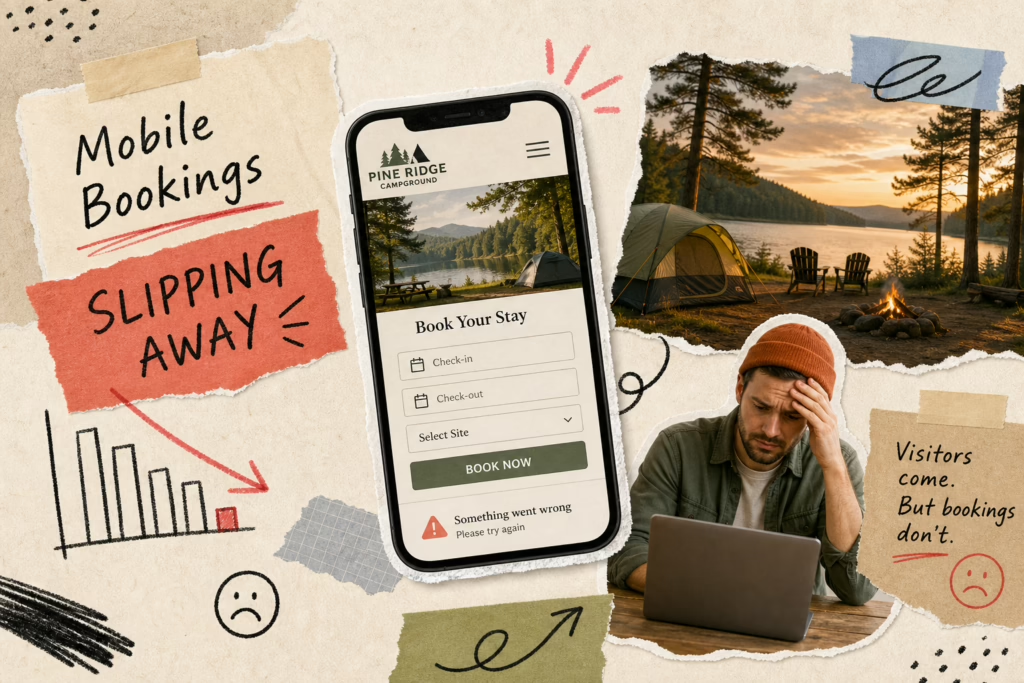
Here’s an uncomfortable truth about camping site advertising: most owners focus entirely on which channel to use and almost none on what happens after the click. A $500 Facebook campaign sending traffic to a slow, mobile-unfriendly website with no clear booking call-to-action is $500 wasted.
Every ad channel in this article drives traffic to one place: your website. If that site loads in more than three seconds, looks like it hasn’t been updated in years, or doesn’t immediately answer “can I book here and what does it cost?”, the ad spend evaporates. Industry benchmarks for booking-style sites recommend staying under two seconds for page load. Studies on conversion rate optimization show that pages loading in one second can convert at 3, 4 times the rate of pages that take four seconds. A Google Ads campaign with a 4% conversion rate on an optimized page outperforms the same campaign at 1% CVR on a slow page by four times on identical spend. That math is unforgiving. To understand the mechanics behind that performance lift, read about how page speed affects conversion.
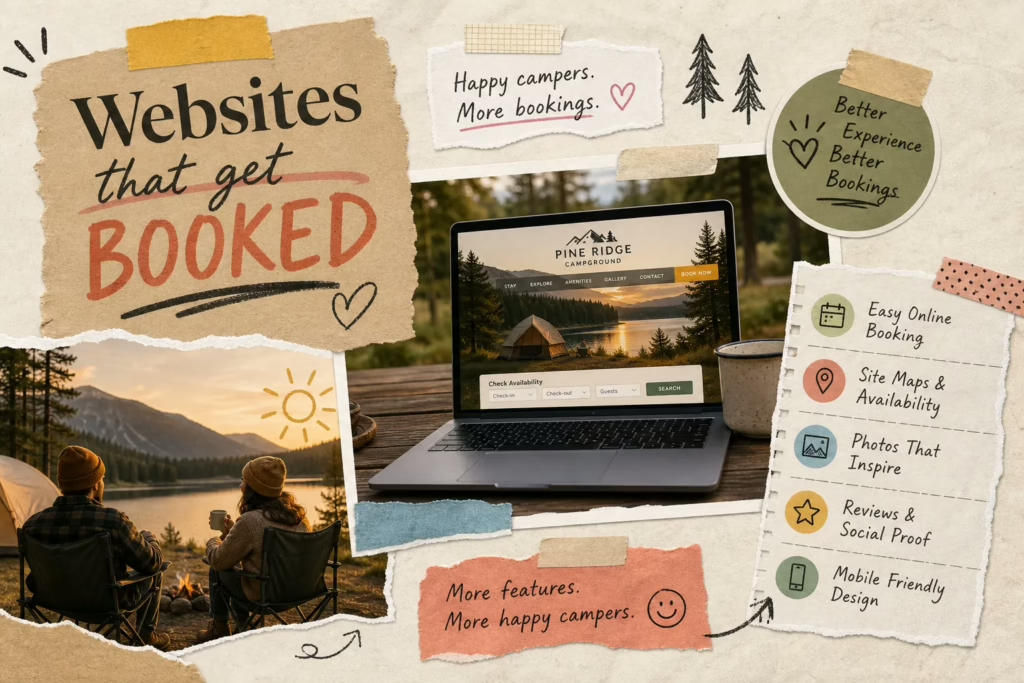
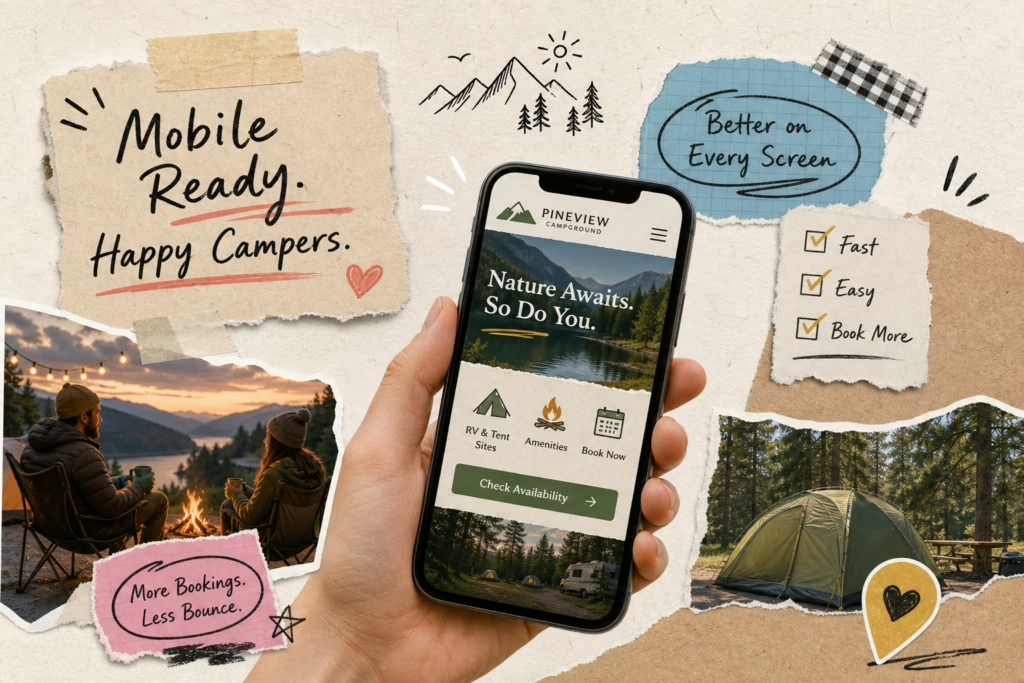
A conversion-optimized campground website includes clear booking CTAs above the fold, mobile-responsive design (most campground searches happen on phones), high-quality site photos, detailed amenity information, and local SEO signals built into the structure. RV Park and Campground Websites (Built By RVers) specializes in exactly this kind of build for campground and RV park owners across the US. With no upfront cost and a flat monthly fee covering design updates, mobile optimization, security, and local SEO submission to Google, Bing, and Yahoo, their service is designed to remove the technical barriers standing between your park and more direct bookings. Their team is made up of actual RVers who understand firsthand what a camper needs to see before hitting “reserve now.”
Once your website converts reliably, pick two or three channels from this article based on your budget and market. Start with Google Ads or a platform like Spot2Nite for intent-driven traffic, layer in social retargeting for warm audiences, and add directory listings for passive reach. Measure occupancy changes month over month, not just clicks, because clicks don’t pay the bills.
The bottom line on campground advertising ideas
No single advertising channel wins every time for every park. The best RV park promotion ideas are the ones you can execute consistently, track clearly, and improve over time. Chasing the “best” channel while ignoring your website is like buying a premium fly rod and never learning to tie the knot: the equipment isn’t the problem.
Fix the foundation first. Get a website that actually converts, then choose your campground advertising ideas based on your audience, your budget, and your capacity to manage the campaigns. These campsite marketing tips apply whether you’re a small family-run park or a large resort operation. Pick one channel this week. Run it seriously for 90 days. Measure what changes. That single decision, made and acted on, will do more for your occupancy than six months of planning ever will. For ongoing ideas and case studies, check the advertising Archives, Campground Websites.