
When it comes to rv park website design, most campers have already decided whether to book, or move on, before they ever pick up the phone. Many guests form that impression quickly, based largely on what your website shows them in those critical first moments of browsing. The team at RV Park and Campground Websites (Built By RVers) sees this pattern with new clients regularly: an owner puzzling over slow reservations while their website quietly turns away guests at every click.
This guide covers what actually makes campground website design work: the layout decisions, the content that converts, the visuals that build desire, the booking flow that doesn’t leak revenue, and an honest look at what it costs to build the right way. No fluff. Just what moves the needle for RV parks and campgrounds.
What campground guests actually look for before they hit “book”
When a potential guest lands on your site, they’re not reading carefully. They’re scanning fast, running through a mental checklist: Can I picture myself here? Does this place look legit? How much does it cost and how do I lock in a spot? Your website isn’t a brochure. It’s a sales tool. If it doesn’t answer those questions within seconds, the visitor is gone and your competitor gets the booking.
The trust signals guests are scanning for
Credibility gets established, or destroyed, in the first scroll. Real photos of your actual sites, a visible phone number, pricing ranges that don’t require a form submission to access, and recent guest reviews are the four things that signal “this is a real, well-run operation.” An outdated or cookie-cutter design kills trust instantly, regardless of how great your park actually is. Guests have no way to separate a beautiful property from a sketchy one except through what your website shows them.
Why information hierarchy matters more than aesthetics
Amenities, location, pricing, and a clear path to booking should never require hunting. A cluttered navigation menu and a buried “Book Now” button directly cost you reservations, conversion research consistently shows that added friction at this stage causes significant drop-off. Think of it this way: every extra click between “I’m interested” and “I’m confirmed” is a door your potential guest might walk out of. The best campground websites put the most important information front and center and leave the deep-dive details (campfire rules, pet policies) one logical click away.
RV Park Website Design: The Pages and Content Every Site Needs
A surprising number of campground websites are either missing critical pages entirely or have them buried so deep that guests give up before finding them. The page structure isn’t complicated, but it needs to be intentional. Every page has a job to do, and if it isn’t doing that job, it’s just digital dead weight.
Your core page lineup (and what each one has to accomplish)
Six pages form the non-negotiable foundation of any effective RV park website: Home, Sites and Rates, Amenities, Location and Directions, Photo Gallery, and a Reservations page. The home page builds desire and points toward booking. Sites and Rates answers the “what do I get and what does it cost” question without making the guest guess. The Amenities page sells the experience. Location and Directions removes a key friction point for first-time visitors. The gallery does the emotional heavy lifting. The Reservations page has one job: convert interest into a confirmed stay.
The copy and content that turns browsers into bookers
Move beyond “we offer full hookups, Wi-Fi, and a dump station.” That’s a checklist, not a story. Specific, sensory-driven copy that describes what it actually feels like to stay at your park tends to outperform generic descriptions, it builds trust and supports SEO by creating content that reflects how real guests search and think. Tell guests about the sound of the creek behind site 14, the Saturday farmer’s market two miles down the road, or why fall is the best season to come. FAQ pages are also no longer optional. With AI-powered search and voice queries on the rise, a well-built FAQ page feeds directly into the results that surface when someone asks their phone, “Are there pet-friendly RV parks near Zion National Park?”
RV Park Website Design: Visuals, Mobile, and What High-Converting Sites Do Differently
Two things separate campground websites that fill spots from ones that don’t: the quality of the photos and whether the site works on a phone. These aren’t separate issues. They’re two sides of the same conversion coin, and getting both wrong means losing guests before they ever read a word of your copy.
Why your photos might be the biggest leak in your booking funnel
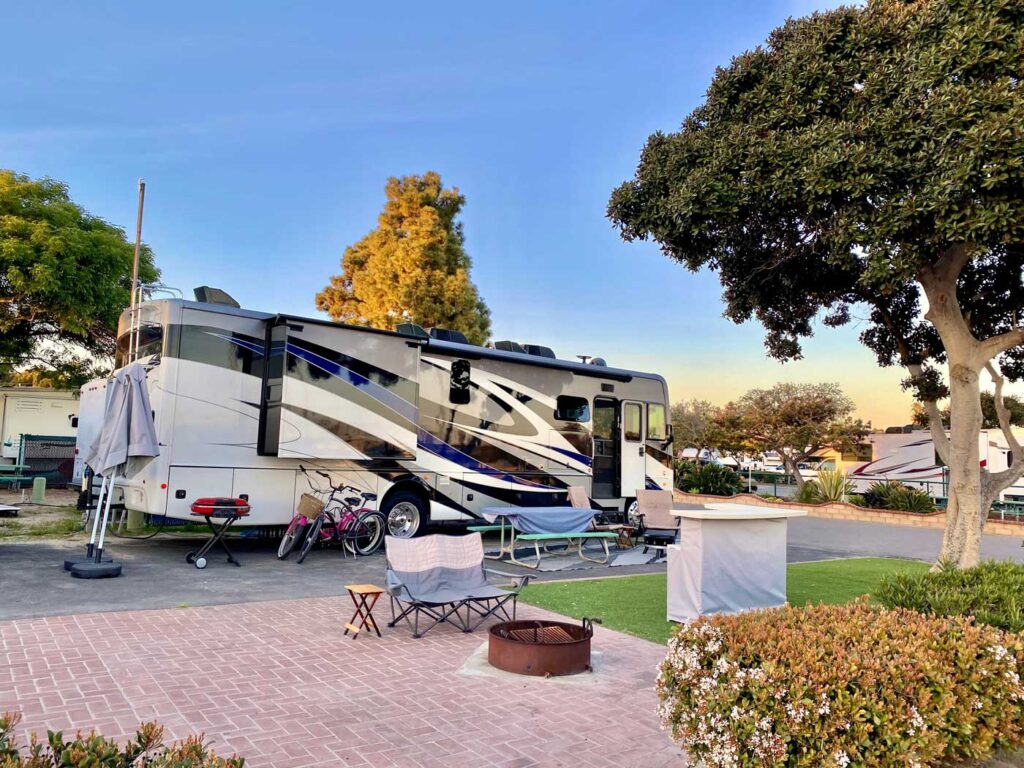
Low-quality or sparse visuals are a silent booking killer. There’s a real difference between a photo that shows a campsite and a photo that sells an experience. The first shows a gravel pad and a hookup box. The second shows a family laughing around a fire with big trees overhead and a purple sunset behind them. Parks like Hudson Ranch Resort and Dos Rios RV Park lead with strong, location-specific photography that puts guests mentally on the property before they’ve reserved anything. Virtual tours are pushing this even further: according to TillerXR, their 360-degree tour helped St. Augustine Campground reach over 350,000 views in 14 months and drove booking increases of up to 20%.
Mobile-first isn’t optional when most guests are searching from their phones
Gen Z books trips digitally at an 84% clip. Millennials aren’t far behind at 71%. Voice searches like “RV parks near Asheville with monthly rates” are growing, and they’re predominantly coming from mobile devices. A properly mobile-optimized campground site loads quickly, uses tap-friendly buttons, displays a click-to-call phone number at the top, and never forces a guest to pinch and zoom just to read your rates. Mobile usability also directly affects your Google rankings for local search queries, a clunky mobile experience doesn’t just frustrate guests. It makes you harder to find in the first place.
Booking Integrations: Campground Reservation Tools That Don’t Lose Guests at the Finish Line
Getting a guest excited about your park and then routing them through a clunky reservation process is like a great first date that ends with “sorry, our card reader is down.” The booking flow is where most campground websites drop the ball, and fixing it is one of the highest-return moves you can make.
How the top reservation platforms compare for RV parks
Three platforms dominate the conversation for most independent RV parks. Campspot is strong for scalability, offers interactive site maps, and carries a 4.6 rating on Capterra. It runs on a per-booking fee model, which makes it more expensive at higher reservation volumes. ResNexus holds the top Capterra ranking overall, offers deep OTA sync with platforms like Vrbo and Airbnb, and includes built-in email marketing tools, a solid choice for parks focused on direct marketing and guest engagement. RoverPass is the budget-friendly option for smaller parks: no transaction fees on online reservations, embeddable booking widgets, and quick setup. The right campground reservation integration depends on your park size, your budget model, and how much you want to lean on direct marketing versus OTA visibility. For a direct comparison of two of the most-discussed platforms, see the ResNexus vs Campspot comparison.
What a frictionless booking flow actually looks like
Eliminating redirects during the reservation process can boost conversions by up to 40% by reducing the drop-off that happens when guests get kicked out of your site into a third-party platform. A “Book Now” button should live in the top navigation on every single page, not just the reservations page. The best campground reservation integrations feel invisible to the guest: they select dates, choose a site, pay, and receive confirmation, all without ever feeling like they’ve left your brand. That seamlessness is what turns a curious visitor into a confirmed reservation. If you want a broader roundup when evaluating providers, review a recent list of the best campground reservation systems to compare feature sets and pricing models.
RV Park Website Cost: Templates, SaaS Platforms, and Specialist Builds
The number one mistake campground owners make when budgeting for a website is comparing price without comparing outcome. A $200 Wix template and a specialist-built site aren’t competing for the same result. Here’s an honest breakdown of what each path typically costs and what you get for it.
What you get at each price tier
RV park website templates from marketplaces like ThemeForest typically run $50 to $500 as a one-time purchase, industry estimates, as exact pricing varies by vendor and year. You get a starting shell, and then you’re on your own for hosting, security, updates, plugin conflicts, and SEO. SaaS platforms (Squarespace, Wix, or campground-specific tools bundled with a booking engine) generally run $20 to $200 per month and bundle some of those headaches away, but they often lock you into their ecosystem with limited flexibility. Custom agency builds from general web design shops typically start around $5,000 and can climb well past that for complex projects. Many of those agencies, however, may lack RV-park-specific experience and may not understand what a campground guest actually needs to see before booking. If you’re shopping templates specifically designed for campgrounds, it’s worth browsing curated camping website templates to compare functionality and mobile readiness.
Why industry-specific matters when a generic campground website keeps falling short
A web designer who doesn’t understand campground guests will build a website that looks fine but doesn’t convert. They’ll bury the rates, use the wrong photos, skip the FAQ page, and miss the keywords your future guests are actually typing into Google. That’s the gap RV Park and Campground Websites (Built By RVers) was built to fill. The model is structured differently from a typical agency: $0 upfront, a flat monthly fee, full management, and SEO built in from day one, with the flexibility to pair with any booking platform on the market. The team builds these sites because they’re RVers themselves, which means the design decisions reflect what real guests need to see, feel, and find before committing to a reservation. When you’re setting pricing expectations for your park, reviewing current rv park rates can help you benchmark nightly and seasonal pricing in your region.
The bottom line on RV park website design
Strong rv park website design isn’t about the fanciest layout or the longest list of features. It’s about removing every possible barrier between a curious visitor and a confirmed reservation. When campground website design gets the fundamentals right, trust signals, clear information hierarchy, pages that sell the experience, visuals built for mobile, and a booking flow that doesn’t create friction, your site stops costing you guests and starts earning you bookings.
If you want the specialist route without the upfront sticker shock, RV Park and Campground Websites (Built By RVers) is worth a conversation. The team has been on both sides of the campground booking experience, and the sites they build reflect it. Put the right campground website design in place, and your reservation calendar will follow.