If you’ve ever asked yourself how to market your campground without a big budget, you’re asking the right question, and the answer is simpler than most owners expect. The problem isn’t money. It’s sequence. Campground owners spend hours posting on Instagram or chasing OTA listings while their Google Business Profile sits half-empty and their website loads like it’s still 2009.
The most effective low-cost campground marketing isn’t a stack of random tips. It’s a prioritized system where each move builds on the one before it. Get that right and you’re competing with parks that spend ten times more. Get it wrong and you’re just busy without being booked.
What follows is a 30-to-90-day action plan. You’ll know exactly which tactics to start first, what each one costs (most of them: nothing), and how to sequence them so your effort actually converts into reservations.
Get your foundation right before anything else
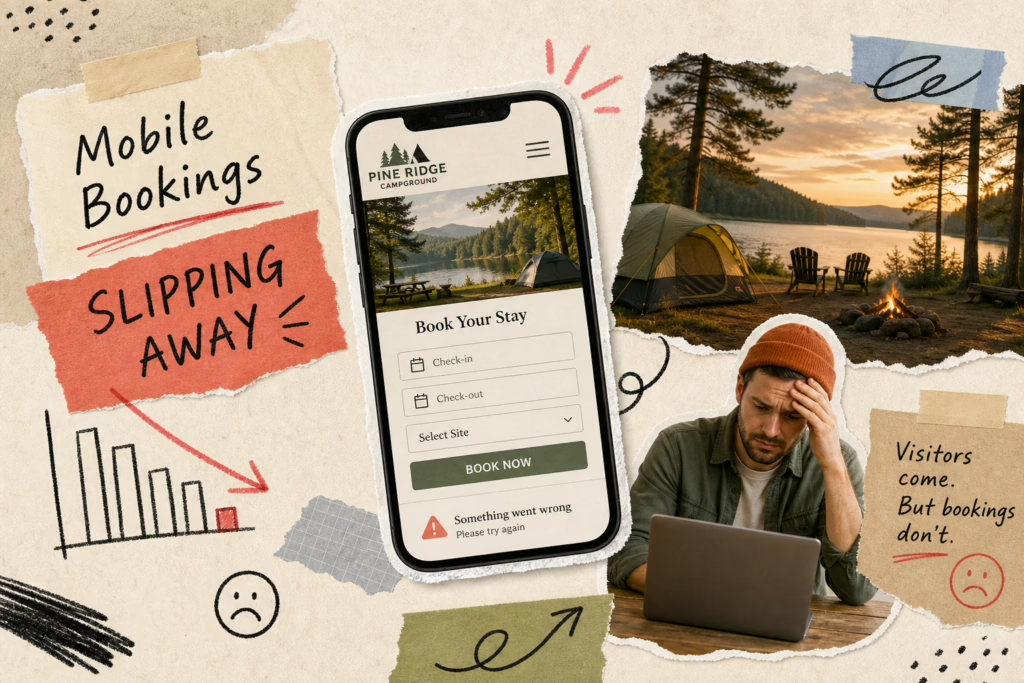
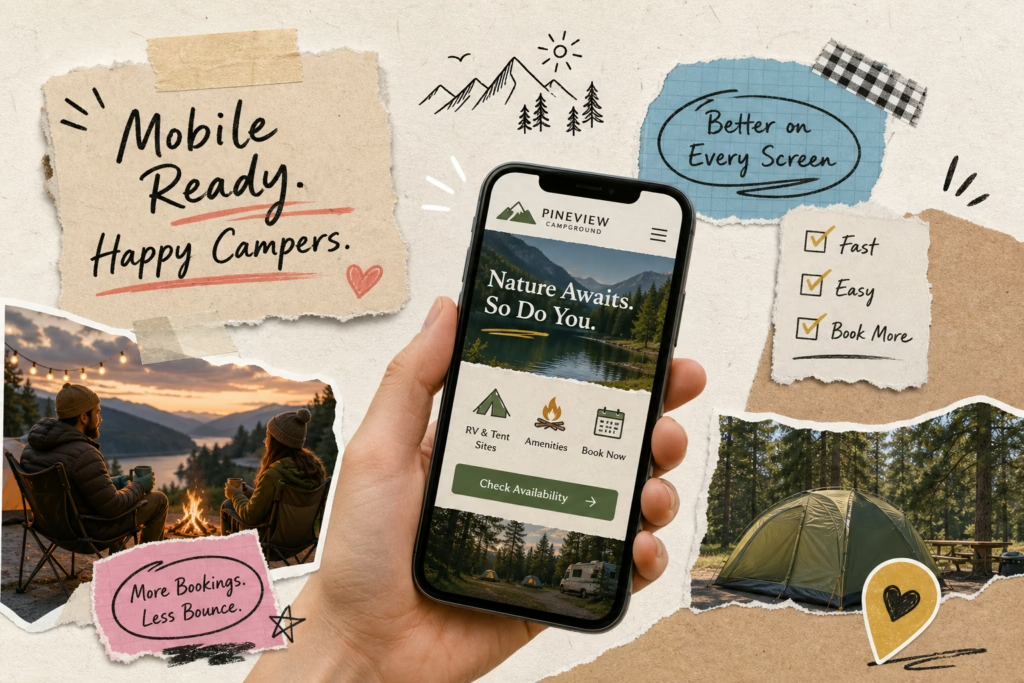
The most common mistake in campground promotion isn’t picking the wrong platform. It’s trying to drive traffic before there’s anything worth arriving at. If your website is outdated, missing pricing, or not mobile-friendly, every visitor you attract is a missed booking. Traffic without a foundation is just expensive noise.
Why sequencing your tactics is the real secret to campground marketing on a budget
Think of campground marketing in four layers: being findable, being bookable, being shareable, and being repeatable. Most owners skip straight to “shareable” because social media feels tangible and immediate. But a beautiful Instagram account pointing to a broken or nonexistent website is like putting a billboard on a road that leads nowhere.
Your foundation is your website and your Google presence. Those two assets work around the clock, capture people already searching for a campground, and convert interest into reservations. Everything else, social media, email, events, amplifies a foundation that already works. Build the foundation first.
The one investment that pays for itself fastest
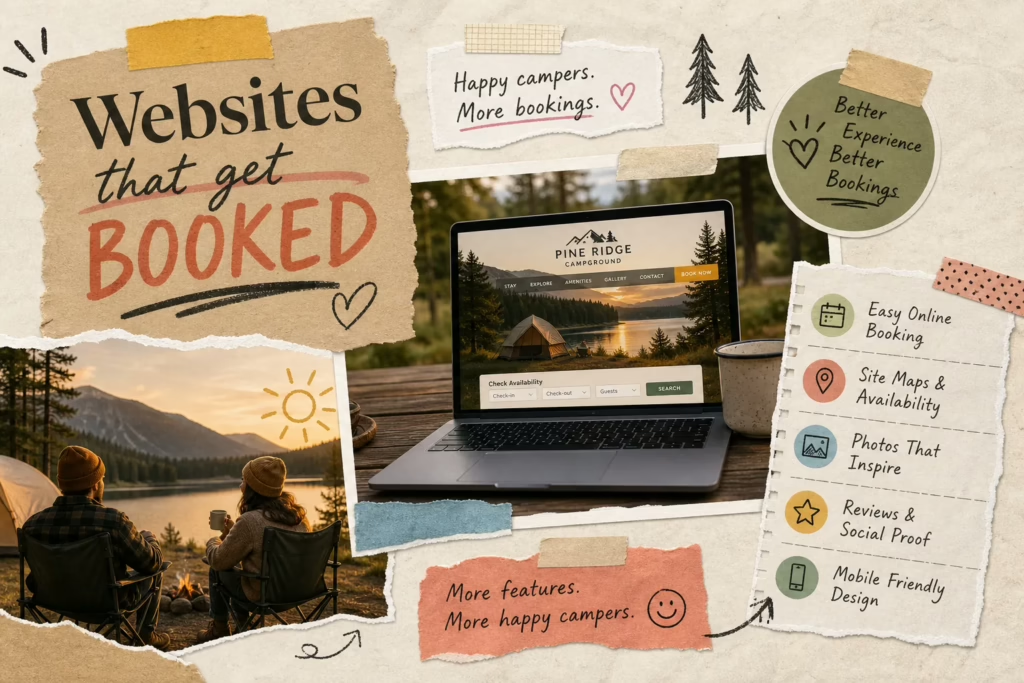
A professional campground website is the single highest-return marketing asset you can have. It’s where every other channel eventually points, and it’s the only place you control completely. Some campground owners are now skipping expensive agencies and long-term OTA commissions by using purpose-built services like RV Park and Campground Websites (Built By RVers), which was designed specifically for campgrounds by people who actually camp. With zero upfront cost and a flat monthly fee, it removes the financial barrier that keeps many small parks stuck with an outdated web presence. If your website is the problem, fix it before you spend a single hour on anything else. Learn more tactics in Campground Advertising Ideas That Actually Drive Bookings.
How to market your campground without a big budget: start with Google
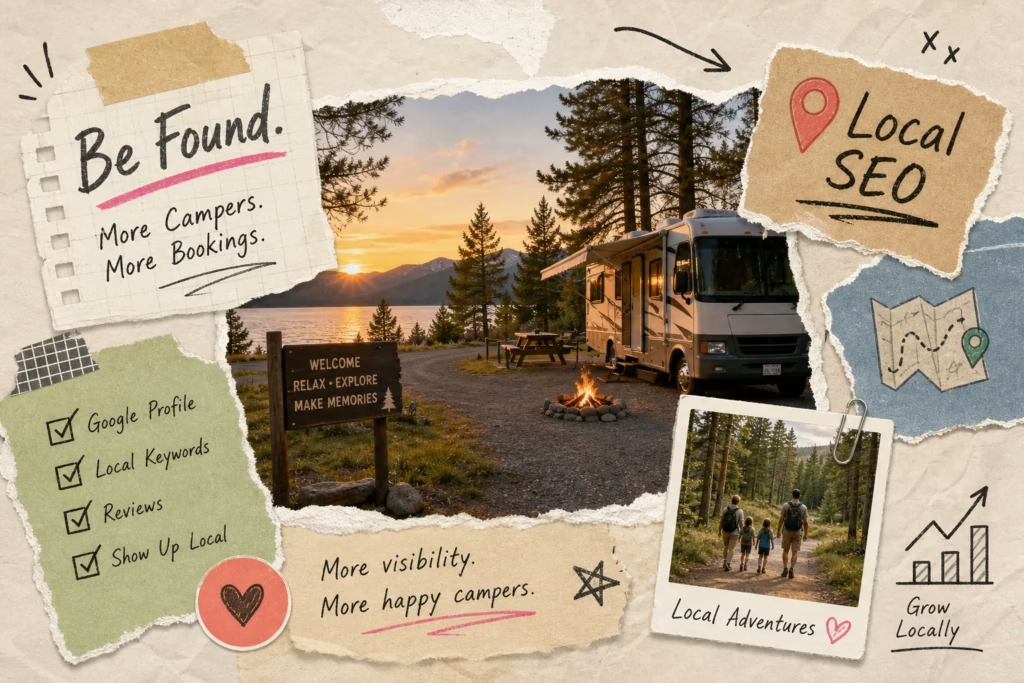
Google Business Profile is the most powerful free tool in campground marketing, and it’s the most underused. Last-minute travelers and regional campers search Google Maps constantly. An optimized profile with accurate info, strong photos, and active updates will surface your campground ahead of competitors who haven’t touched their listing in years.
Setting up and claiming your profile the right way
Claim your profile if you haven’t already, then treat every field as prime real estate. Choose the right business category, write a description that naturally includes phrases like “RV park near [city]” or “family campground in [region],” and list every amenity you offer. Add your exact address, phone number, hours, and a direct booking link. One missing field can mean the difference between showing up in a local search and getting buried three pages deep.
The photo and update habits that boost your ranking
Google rewards active profiles. Post seasonal updates, add new photos regularly, answer visitor questions, and respond to every review. These signals tell Google your business is alive and worth showing to searchers. A campground with 40 photos, weekly posts, and consistent reviews will outrank a nicer park that set up its profile once and forgot about it.
Which other free listing platforms are worth your time
Beyond Google, campground SEO and listings go hand in hand, so list your campground on Hipcamp, Campendium, The Dyrt, and Good Sam. Each platform puts your property in front of campers who browse before they book. Hipcamp operates on roughly a 10% commission, RoverPass runs around 15%, and Good Sam uses a small flat fee per reservation rather than a percentage. Treat these as visibility channels, not replacements for direct bookings. Your own website should always be the booking destination you push hardest. For a deeper comparison of listing platforms, see the best directories to list your RV park.
Guest reviews: the free campground promotion most owners leave on the table
Reviews are more persuasive than any ad you could buy. A camper deciding between two similar parks will read the reviews before they look at the price. Strong, recent reviews don’t just build trust, they directly influence where Google ranks your profile in local search. This is free campground promotion you earn by simply asking for it.
A simple system for collecting reviews without begging
The best time to ask is right after a great moment: checkout, or a follow-up text or email sent 24 to 48 hours later. Keep the ask short and genuine. Give them a direct link to your Google listing or Campendium profile so it’s one tap away. A happy guest who just had a great stay will almost always leave a review when you remove every possible friction point from the process.
How to showcase reviews to drive even more bookings
One good review can do multiple jobs. Feature testimonials on your campground website. Share them in your email newsletter. Turn them into social posts with a simple Canva graphic. A review posted on Google in March can still be working for you in October when someone’s planning a fall camping trip. Don’t let that proof sit idle on a platform you don’t control.
Email and text: the repeat-booking channels that cost almost nothing
Your guest email list is worth more than any social following you’ll ever build. You own it. No algorithm controls who sees your message. And for repeat bookings, a well-timed email to someone who already loves your campground is far more effective than trying to win over a stranger through a paid ad.
Building your list from day one (even without a big audience)
Ask for an email address at reservation or check-in. Add a newsletter signup to your website with a small incentive, like a return discount or early access to summer availability. You don’t need thousands of subscribers to make this worthwhile. A list of 300 past guests is a direct line to people already predisposed to book with you again. Free tools like MailerLite (up to 500 subscribers), Brevo (up to 9,000 emails per month), and Sender (2,500 subscribers free) give you everything you need to get started without spending a dollar.
What to actually send (and how often)
Keep it practical and useful: seasonal availability updates, upcoming events, last-minute openings, and occasional “we miss you” re-engagement emails for guests who haven’t returned in a while. Twice a month is a sustainable cadence for most campground owners. Aim for consistency over ambition. A biweekly email you actually send beats a weekly newsletter that collapses after the first three issues.
Automating the work so it doesn’t eat your time
Automation is where email becomes truly low-effort, and where this tactic earns its place in any budget campground marketing plan. Set up a sequence that fires automatically: a booking confirmation, a pre-arrival tips email, a post-stay review request, and a seasonal re-engagement message timed to when the guest last visited. You configure it once and it runs without daily input. It runs itself while you focus on the actual park.
Social media and photo content that actually converts
Social media works for campgrounds when it’s used consistently and with the right content mix. Most parks either post too sporadically to build any momentum, or they fill their feed with generic promotional posts that nobody engages with. The fix isn’t posting more. It’s posting smarter.
The content mix that works for campground audiences
In practice, the content that moves the needle most is high-quality scenic photos, short reels or site walkthroughs, guest-generated photos and testimonials, and behind-the-scenes clips. Campers make emotional, lifestyle-driven booking decisions. Authenticity beats polish every time. You don’t need a production crew, just good light and a phone camera. Canva is free and easy to use for creating clean graphics and polished quote cards from guest reviews, with no design experience required. For tactical social tips, check out this guide on how to leverage social media for your campground.
A realistic posting schedule that you’ll actually stick to
Two to three posts per week is the sweet spot for most campground operations. A useful weekly rhythm: one scenic or amenity photo, one guest share or review highlight, and one availability or event post. That simple mix covers all three stages of the booking funnel, awareness, trust, and action. Consistency matters more than volume. A steady presence over six months will always outperform a burst of daily posts followed by radio silence.
Local partnerships and weekend events that fill your slow nights
The most underused campground marketing tactic isn’t digital at all. Local cross-promotions and themed events borrow existing audiences at zero cost and create urgency that no ad campaign can replicate cheaply. A partnership with the right local business brings you warm, ready-to-book customers who were already planning a weekend in your area.
Which local businesses make the best partners
Start with outdoor outfitters, kayak, bike, and fishing shops, then look at family attractions, breweries, restaurants, and local tourism boards. The logic is simple: find businesses that already have your target customer on a weekend and give both sides a reason to refer. A kayak rental that sends campers your way gets more customers who need a home base. You get guests who already have a full weekend plan and just need a place to sleep.
Themed events and weekend packages that create urgency
Guerrilla marketing for campgrounds doesn’t require a big budget, just creativity and timing. Event formats that reliably drive bookings include stargazing nights, fall foliage weekends, guided hike packages, food and fire cookoffs, and “camp and dine” bundles with a local restaurant. The structure that works is always the same: fixed dates, limited inventory, clear inclusions, and a promo code to track results. Scarcity and a deadline convert browsers into bookers faster than any discount alone. For examples of smart local promotions, consider these smart campground advertising ideas for local businesses.
How to structure the deal so it’s easy to say yes
Keep the partnership simple enough that both sides will actually promote it. Reciprocal coupons, one co-branded social post, and a shared booking link are usually enough to get a partner engaged. Give each partner a unique promo code so you can measure which collaborations produce real stays. The simpler the structure, the higher the follow-through from both sides, and the easier it is to repeat next season. For quick, ready-to-implement ideas you can use this season, see Campground Advertising Ideas: 9 Ways to Book More Guests.
Your 30-to-90-day campground marketing action plan
Here’s how to sequence everything above into a realistic timeline. Don’t try to do it all at once.
Days 1 to 30: fix the foundation. Claim and fully optimize your Google Business Profile. Update or build your campground website. List on at least two free directories. This is the work that makes every other tactic more effective, and it costs next to nothing.
Days 30 to 60: build the trust layer. Set up your review request system and send it to every departing guest. Start your email list using a free tool and send your first newsletter. Establish a basic social posting rhythm of two to three times per week. At this point you’re findable and credible. One thing to watch here: keep your review ask genuinely short. A long or awkward request is worse than no request at all.
Days 60 to 90: grow the audience. Reach out to two or three local businesses for cross-promotion deals. Plan one themed event or weekend package for your next slow period. Measure what’s working with your email platform’s built-in reports and your Google Business Profile insights.
Knowing how to market your campground without a big budget comes down to one principle: consistency compounds. Each tactic builds on the last. The parks that fill sites year after year aren’t the ones with the biggest ad spend, they’re the ones with the most consistent presence and the most trusted reputation. Any campground owner can build that for almost nothing, starting today.
Ready to start with the highest-leverage move? For ongoing tips and examples, visit our Campground Marketing Ideas: Our Blog.
Ready to start with the highest-leverage move? See how RV Park and Campground Websites (Built By RVers) can get your foundation in place, no upfront cost, no long-term contract.
PS, If you want to make direct bookings easier on your site, consider integrating campground booking software; a useful guide is available at campground booking software.